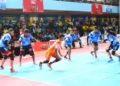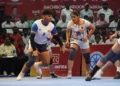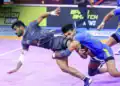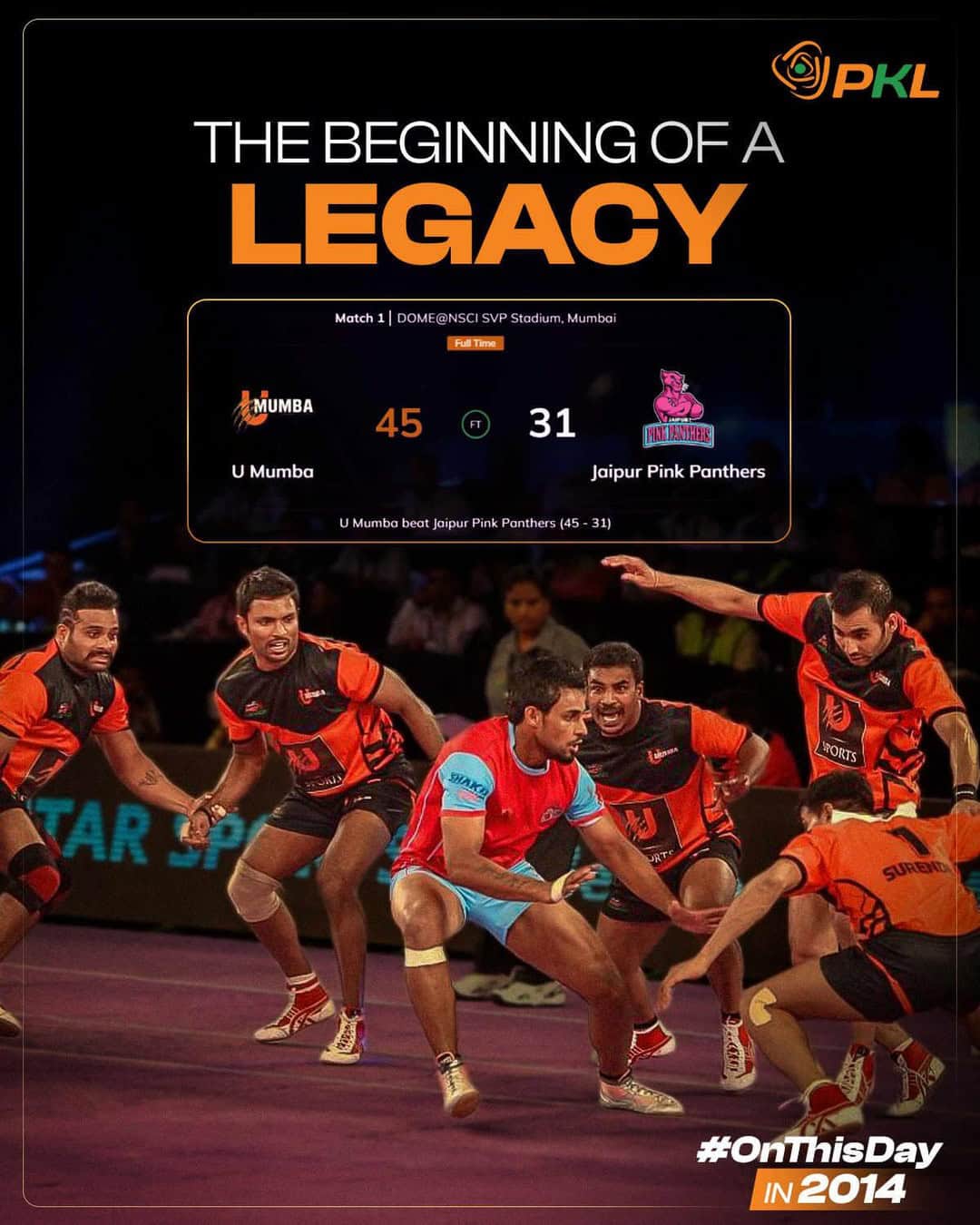
The Pro Kabaddi League (PKL) changed the future of kabaddi in India when it launched its inaugural season in 2014. Before then, kabaddi was mainly played on mud courts and enjoyed popularity mostly in rural areas. However, within just a few weeks, the league transformed the traditional sport into a modern television spectacle that attracted millions of viewers across the country.
This first Pro Kabaddi League Season guide covers everything you need to know about the historic tournament that changed Indian sport forever.
Pro Kabaddi League 2014 Overview
The Pro Kabaddi League 2014 overview began on July 26, 2014, and concluded on August 31, 2014. The league was organised by Mashal Sports, led by Anand Mahindra and Charu Sharma, in partnership with Star India.
The tournament featured eight city-based franchises competing across 60 matches, including a double round-robin league stage followed by four playoff games.
The player auction was held in Mumbai on May 20, 2014, with 72 Indian and 28 overseas players taking part. Rakesh Kumar became the most expensive player after being bought by Patna Pirates for ₹12.80 lakh.
Most importantly, the inaugural season reached more than 435 million viewers, immediately becoming India’s second most watched sports league after the Indian Premier League.
The Eight Original Teams
The first season featured eight franchises representing different cities across India:
- Jaipur Pink Panthers
- U Mumba
- Bengaluru Bulls
- Patna Pirates
- Telugu Titans
- Dabang Delhi K.C.
- Bengal Warriors
- Puneri Paltan
The city-based franchise model helped fans connect with their local teams and played a major role in the league’s popularity.
Rule Changes That Modernised Kabaddi
One of the biggest reasons behind the success of the PKL Season 1 history was the introduction of exciting new rules.
Traditional mud courts were replaced with indoor synthetic mats, making the game faster and more visually appealing. A 30-second raid clock ensured every raid remained quick and action-packed.
The league also introduced the Do-or-Die Raid, where a team failing to score in two consecutive raids had to score in the third attempt or lose the raider.
Another innovation was the Super Tackle, which awarded two points to the defending team if they successfully tackled a raider while having only three or fewer defenders on the mat.
These rule changes increased excitement and made the sport more suitable for television audiences.
Playoffs and Championship
After the league stage, the top four teams qualified for the playoffs at the Sardar Vallabhbhai Patel Indoor Stadium in Mumbai.
Jaipur Pink Panthers defeated Patna Pirates 38-18 in the first semifinal, while U Mumba overcame Bengaluru Bulls 27-23in the second semifinal.
In the final, Jaipur Pink Panthers defeated U Mumba 35-24 to become the first champions in PKL history.
Top Performers
U Mumba captain Anup Kumar enjoyed a remarkable season, finishing as both the Most Valuable Player and the Top Raider with 155 raid points.
Rahul Chaudhari of Telugu Titans emerged as the breakout star with 151 raid points, while Manjeet Chhillar and Surender Nada shared the honour of being the league’s top defenders with 51 tackle points each.
Jaipur’s Maninder Singh starred in the final with several crucial raids that helped his team secure the title.
A Lasting Legacy
The first Pro Kabaddi League Season guide would be incomplete without recognising its lasting impact. The final alone attracted 86.4 million viewers, making it one of the most watched non cricket sporting events in India at the time.
The PKL Season 1 history also transformed kabaddi into a professional career, providing players with better salaries, national recognition, and global opportunities. More than a decade later, the Pro Kabaddi League 2014 overview remains one of the greatest success stories in Indian sport, proving that traditional games can achieve massive commercial and sporting success with the right vision and presentation.