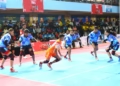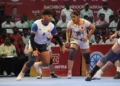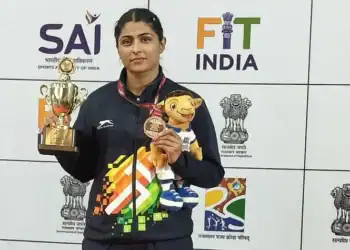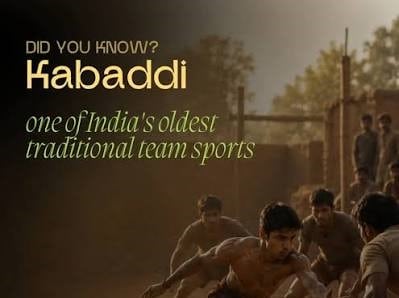
Kabaddi is one of India’s oldest indigenous sports, with deep cultural roots across several parts of the country. Yet when it comes to popularity, commercial value and mainstream attention, it continues to live in the shadow of cricket. The difference between Kabaddi vs cricket in India is not simply about which sport is more exciting. It is also about international competition, media coverage, money, sponsorships and the ability to create national sporting heroes.
However, it is important to understand that kabaddi is not an unpopular sport. The arrival of the Pro Kabaddi League in 2014 helped establish kabaddi as one of India’s biggest sports. It has built a large television audience and has become particularly popular in India’s Tier 2 and Tier 3 cities.
Cricket Has a Bigger Global Stage
One major reason why cricket is more popular than kabaddi is the scale of international competition. Cricket has some of the biggest sporting rivalries in the world, including India versus Pakistan and the Ashes between England and Australia.
Major international tournaments also give cricket fans regular opportunities to support India on the biggest stage. India’s World Cup victories in 1983, 2007, 2011 and 2024 created generations of fans and produced unforgettable sporting moments.
Kabaddi has struggled to create the same level of international competition. India has traditionally dominated major Asian Games and World Cup competitions, with Iran emerging as one of the strongest challengers. This lack of unpredictable international rivalry makes it harder for kabaddi to generate the same national excitement.
Cricket Has a Bigger Commercial Machine
The financial difference between the two sports is enormous. Cricket has developed a huge commercial ecosystem around the IPL, BCCI, broadcasters, sponsors and advertisers.
Cricket also offers broadcasters plenty of opportunities to show advertisements because matches naturally contain breaks between overs, wickets and other phases of play. Kabaddi has continuous action, with two 20-minute halves and a single main interval, giving broadcasters fewer natural advertising opportunities.
This helps explain why cricket can generate much greater media rights and sponsorship values even when kabaddi attracts a significant audience.
Kabaddi Still Has a Rural Image
Another factor behind why kabaddi is not popular in India at the same level as cricket is its historical image. Kabaddi developed strongly in rural and semi-urban communities and was traditionally played on mud grounds.
The Pro Kabaddi League changed this image to a large extent by introducing indoor arenas, professional teams, television production and major sponsors. However, kabaddi still has a stronger connection with rural and Tier 2 and Tier 3 India than with India’s major metropolitan youth culture.
Cricket, meanwhile, has become deeply integrated into schools, colleges, offices, entertainment and urban social life.
Cricket Produces Bigger Sporting Icons
Cricket has also created some of India’s biggest sporting celebrities. Sachin Tendulkar, MS Dhoni and Virat Kohli have become household names beyond sport itself.
Kabaddi has stars such as Pardeep Narwal, Pawan Sehrawat and Naveen Kumar, but they have not received the same level of mainstream celebrity exposure or major national advertising campaigns.
How Popular Is Kabaddi in India?
So, how popular is kabaddi in India? It is much more popular than the phrase “unpopular sport” suggests. The Pro Kabaddi League has helped make it one of the country’s most watched domestic sports and has built a loyal audience.
The real issue is not kabaddi’s lack of popularity. It is the enormous gap between kabaddi and cricket in commercial power, global competition, media coverage and cultural influence.
Kabaddi therefore does not need to replace cricket. Its bigger challenge is building a stronger international ecosystem, developing more global stars and expanding its commercial reach. Until that happens, cricket is likely to remain India’s biggest sporting obsession while kabaddi continues to fight for the space immediately behind it.