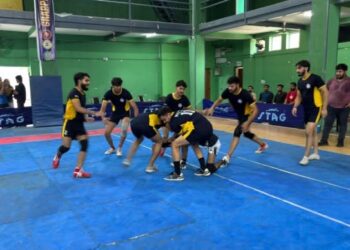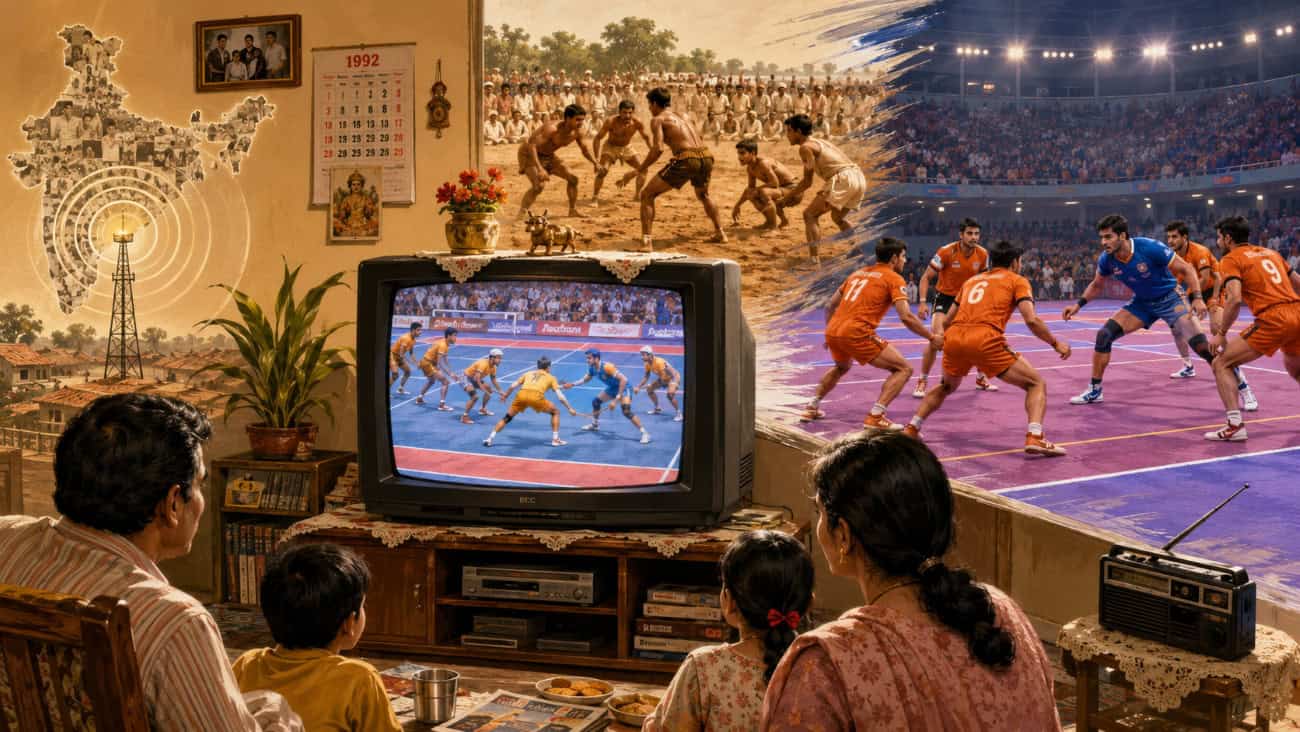
Today, kabaddi is one of India’s biggest sports properties, with the Pro Kabaddi League (PKL) attracting millions of viewers every season. Packed indoor arenas, high-definition broadcasts, and international stars have transformed the game into a modern spectacle.
However, long before the franchise era, one broadcaster played the biggest role in taking kabaddi from village grounds to television screens across the country. The Doordarshan kabaddi history is closely linked with the rise of the sport, making the public broadcaster one of the unsung heroes of Indian kabaddi.
The 1982 Asian Games Changed Everything
The turning point in the history of kabaddi broadcasting came during the 1982 Asian Games in New Delhi.
The event marked the arrival of color television in India. To cover the Games, Doordarshan upgraded its broadcasting network, allowing millions of Indians to experience live sporting events in color for the first time.
Kabaddi was included as a demonstration sport during the Games, introducing urban audiences to a sport that had largely been associated with rural India.
For many viewers, it was their first opportunity to watch the speed, power, and tactical nature of kabaddi without ever stepping onto a mud court. The visual impact of raids, tackles, and team strategy helped change public perception of the game.
Doordarshan Became Kabaddi’s Home
The 1990s brought rapid growth in private television channels, with cricket and international football dominating sports coverage.
Instead of competing directly, Doordarshan strengthened its commitment to promoting indigenous sports.
The launch of DD Sports in March 1998 became another major milestone in the Doordarshan kabaddi history.
The dedicated sports channel regularly televised Senior National Kabaddi Championships, Federation Cup matches, and other domestic competitions that received little attention elsewhere.
Because Doordarshan was available free of cost across India, these broadcasts reached both urban households and remote villages, ensuring kabaddi remained accessible to millions of fans.
Creating a Generation of Fans
The importance of kabaddi on Doordarshan went far beyond simply showing matches.
Weekend broadcasts helped familiarise viewers with the sport’s rules, tactics, and terminology. Fans became comfortable with concepts such as bonus lines, super tackles, and the famous “kabaddi” chant long before professional leagues existed.
These regular telecasts also introduced audiences to India’s top players and created a loyal fan base that would later embrace the Pro Kabaddi League.
Without this steady exposure, kabaddi may never have developed the nationwide popularity it enjoys today.
Documenting the Sport’s Evolution
Doordarshan also played an important role in recording kabaddi’s transformation.
As the sport shifted from traditional mud courts to standardized indoor mats, television broadcasts allowed fans to witness the evolution of international rules and playing conditions.
Coverage of events such as the 1990 Asian Games, where kabaddi became a medal sport, helped viewers understand the growing professionalism of the game.
These broadcasts connected regional styles of kabaddi with an increasingly standardized international format.
A Lasting Legacy
Modern kabaddi has benefited from advanced production, multiple camera angles, and global streaming platforms. Yet the success of today’s game rests on foundations built decades earlier.
The history of kabaddi broadcasting cannot be told without recognising Doordarshan’s contribution. At a time when commercial broadcasters focused elsewhere, DD continued to showcase India’s traditional sport to millions of households.
Before prime-time lights, celebrity players, and sold-out arenas, kabaddi on Doordarshan kept the sport alive in living rooms across the country, ensuring it remained a cherished part of India’s sporting culture and paving the way for the professional era that followed.