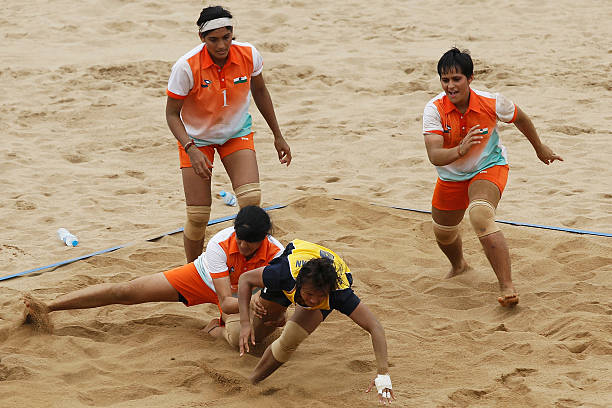
Kabaddi has long been one of Asia’s most popular traditional sports. While indoor kabaddi has gained worldwide attention through professional leagues, beach kabaddi is now creating its own success story. The growth of beach kabaddi in Asia has been remarkable over the last few years, with more countries investing in the sport and more fans following the action.
Played on soft sand and featuring a faster format, beach kabaddi has become an exciting attraction at major sporting events. The recent Asian Beach Games in Sanya, China, showed just how far the sport has come and why its future looks bright.
What Makes Beach Kabaddi Different?
Beach kabaddi is not simply indoor kabaddi played on sand. The sport has its own unique rules that make matches faster and more entertaining.
Unlike indoor kabaddi, which is played with seven players on each side, beach kabaddi features four players on the court with two substitutes available. This creates more space for raiders and leads to more attacking action.
Matches are also shorter, consisting of two 15-minute halves. Another important difference is that there are no player revivals during the game. This keeps the action moving quickly and ensures that every point is important.
These changes have helped increase beach kabaddi popularity among both players and spectators.
Asian Beach Games Showcase the Sport’s Growth
The 2026 Asian Beach Games in Sanya became a major milestone for the sport.
In the women’s competition, India once again showed why they are the dominant force in beach kabaddi. The Indian team secured its sixth consecutive gold medal by defeating Sri Lanka in the final.
The men’s competition delivered a different story. Iran produced a strong performance to beat India and claim the gold medal. This result highlighted the growing competitiveness of beach kabaddi across Asia.
The success of nations such as Sri Lanka, Bangladesh, Pakistan, and Nepal also demonstrated the continued growth of beach kabaddi in Asia.
Grassroots Development Driving Success
One of the biggest reasons for the sport’s expansion is the focus on grassroots development.
Several countries have started investing in beach sports programs and competitions. Events such as the Khelo India Beach Games have helped identify and develop new talent in coastal regions.
These programs provide opportunities for young athletes to learn the sport and compete at a higher level. As participation increases, the quality of competition also continues to improve.
This investment has played a major role in boosting beach kabaddi popularity across the continent.
A Sport Built for Excitement
Beach kabaddi offers a different challenge compared to the indoor version.
Playing on sand requires players to use more energy and maintain balance on an unstable surface. This creates exciting contests filled with quick movements, powerful tackles, and dramatic raids.
The simple rules and fast pace also make the sport easy for new fans to understand. This has helped attract larger audiences at beach festivals, sporting events, and television broadcasts.
A Bright Future Ahead
The future of beach kabaddi looks extremely promising. The sport is attracting new players, expanding into more countries, and receiving greater support from sports organizations.
The continued growth of beach kabaddi in Asia is creating new opportunities for athletes and helping the game reach wider audiences. With exciting competitions, rising standards, and increasing investment, beach kabaddi popularity is expected to grow even further in the coming years.
As more nations embrace the sport, beach kabaddi is rapidly transforming from a regional pastime into one of Asia’s most exciting sporting attractions.