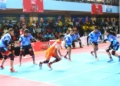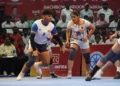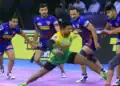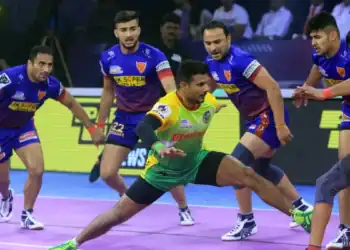
Kabaddi has become one of the fastest-growing sports in the world, especially after the success of the Pro Kabaddi League and the sport’s increasing international popularity. However, many fans have been surprised to learn that kabaddi will not be part of the Commonwealth Games 2026 in Glasgow.
So, why kabaddi is not in Commonwealth Games despite its growing fan base? The answer lies in a combination of global participation, financial challenges, and the Commonwealth Games Federation’s event planning. Here is a closer look at why the sport has missed out on the 2026 edition and what the future could hold.
Limited Global Presence Across Commonwealth Nations
One of the biggest reasons behind the Commonwealth Games 2026 kabaddi exclusion is the sport’s limited global reach.
To become an official medal event, a sport must have strong participation across a large number of Commonwealth nations spread over different continents. While kabaddi enjoys huge popularity in countries such as India, Pakistan, and Bangladesh, and has a growing presence in nations like the United Kingdom and Canada, it is still not widely played at an elite level across most of the Commonwealth’s 74 nations and territories.
Without enough active national federations and international competition across Africa, Oceania, the Caribbean, and other regions, kabaddi does not yet meet the participation standards expected by the Commonwealth Games Federation.
Budget Cuts Forced Major Changes
Another major reason why kabaddi is not in Commonwealth Games is the financial situation surrounding the 2026 Games.
The original host city, Victoria in Australia, withdrew because of rising costs, putting the future of the event in doubt. Glasgow stepped in to host the Games, but only after agreeing to organize a much smaller and more affordable tournament.
To keep costs under control with a budget of around £150 million, the sporting programme was reduced from 19 sports to just 10 core disciplines.
Several well-established sports, including cricket, hockey, badminton, and wrestling, were also removed from the schedule. Since even these established events were left out, there was no opportunity to include newer sports such as kabaddi.
Host City Priorities Also Played a Role
The exclusion of kabaddi from Commonwealth Games explained here also involves the role of the host city.
Host cities have some flexibility in selecting optional sports. Glasgow chose sports that already had suitable venues and strong local interest, such as judo, netball, and lawn bowls.
This approach helped avoid additional construction costs while keeping the event simple and financially sustainable. Unfortunately, kabaddi did not fit into those plans.
Could Kabaddi Join the Commonwealth Games in the Future?
Although Commonwealth Games 2026 kabaddi is not happening, the sport’s future looks much brighter.
The Amateur Kabaddi Federation of India has planned a standalone Commonwealth Kabaddi Championship later in 2026 to continue promoting the sport among Commonwealth nations.
Even more importantly, Ahmedabad has been recommended to host the 2030 Commonwealth Games. Since India is the birthplace of kabaddi, there is growing optimism that the sport could finally make its Commonwealth Games debut during the centenary edition.
Commonwealth Games Federation Chief Executive Katie Sadleir has also indicated that host nation sports could receive greater attention in future editions, placing kabaddi firmly under consideration.
While fans may be disappointed by its absence in Glasgow, the Kabaddi Commonwealth Games Explained story suggests that the sport still has a realistic opportunity to become part of the Games in 2030. With increasing international growth and strong support from India, kabaddi’s Commonwealth dream is far from over.