Kabaddi has changed dramatically over the past decade. Before the launch of the Pro Kabaddi League (PKL) in 2014, the sport was largely played on mud courts with a greater focus on endurance, patience and traditional tactics. Today, the game is faster, more aggressive and designed for television audiences.
The differences between traditional kabaddi vs modern kabaddi go far beyond the playing surface. Several rule changes have completely transformed how teams attack, defend and manage matches.
Pre-PKL Kabaddi Rules
One of the biggest features of Pre-PKL kabaddi rules was the importance of the raider’s breath.
Unlike today’s game, there was no electronic countdown clock. Raiders had to continuously chant “kabaddi” while holding a single breath throughout the raid. Once the player ran out of breath, the raid ended.
This made lung capacity and stamina just as important as speed or strength. Defenders often delayed tackles, forcing raiders to lose their breath before attempting to escape.
Modern kabaddi has replaced that system with a strict time limit, changing the entire rhythm of the sport.
What Are The New Rules in PKL?
Many fans ask what are the new rules in PKL. The biggest change is the introduction of the 30-second raid clock. Every raid must now be completed within 30 seconds, encouraging quick decisions and constant attacking play.
Another major innovation is the Do-or-Die Raid rule. If a team produces two consecutive empty raids, the third raid becomes compulsory. The raider must score a point through a touch or bonus. If not, the raider is automatically declared out and the defending team earns a point.
This rule has almost completely eliminated time-wasting tactics that were common in traditional Kabaddi.
Modern PKL also rewards strong defending through the super tackle. When three or fewer defenders remain on the mat, successfully stopping a raider earns the team two points instead of one.
Traditional Kabaddi vs Modern Kabaddi
The debate over traditional kabaddi vs modern kabaddi often focuses on playing style.
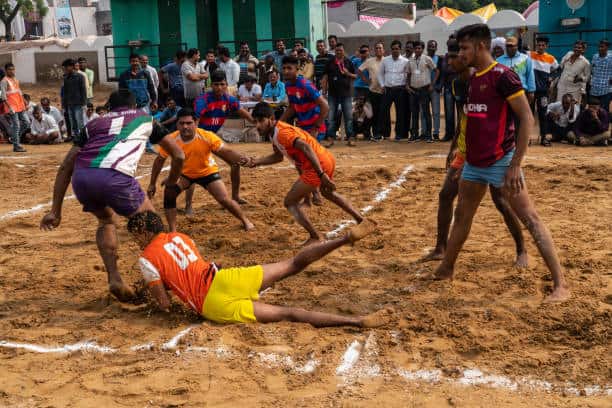
Traditional formats such as Sanjeevani, Gaminee and Circle-style Kabaddi were played outdoors. Circle-style, which remains popular in Punjab, features a circular field without bonus lines or lobbies. It is primarily a one-on-one contest between the raider and a defender.
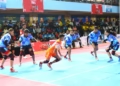
Modern PKL is played on a standardized 13 metre by 10 metre synthetic mat. Teams rely on coordinated defensive formations involving corners, covers and ins, creating more tactical teamwork than ever before.
The mat surface also allows for faster movement, spectacular dives and more consistent playing conditions.
What Are the Latest Rules of Kabaddi?
For those asking what are the latest rules of kabaddi, several important updates have been introduced during the 2025 and 2026 PKL cycle.
League matches can no longer finish as draws. If scores are level after regulation time, teams compete in a five-raid shootout. If the tie remains, a Golden Raid decides the winner.
The league points system has also been simplified. Teams now receive two points for a win and no points for a defeat, increasing the importance of every match.
The regular season has been shortened from 132 matches to 108, reducing player workload while making every fixture more competitive.
The playoff system has expanded to include eight teams, with clubs finishing fifth to eighth battling in Play-in matches before reaching the Eliminators.
These changes have made Kabaddi quicker, more entertaining and more competitive, while preserving the core skills that have defined the sport for centuries.