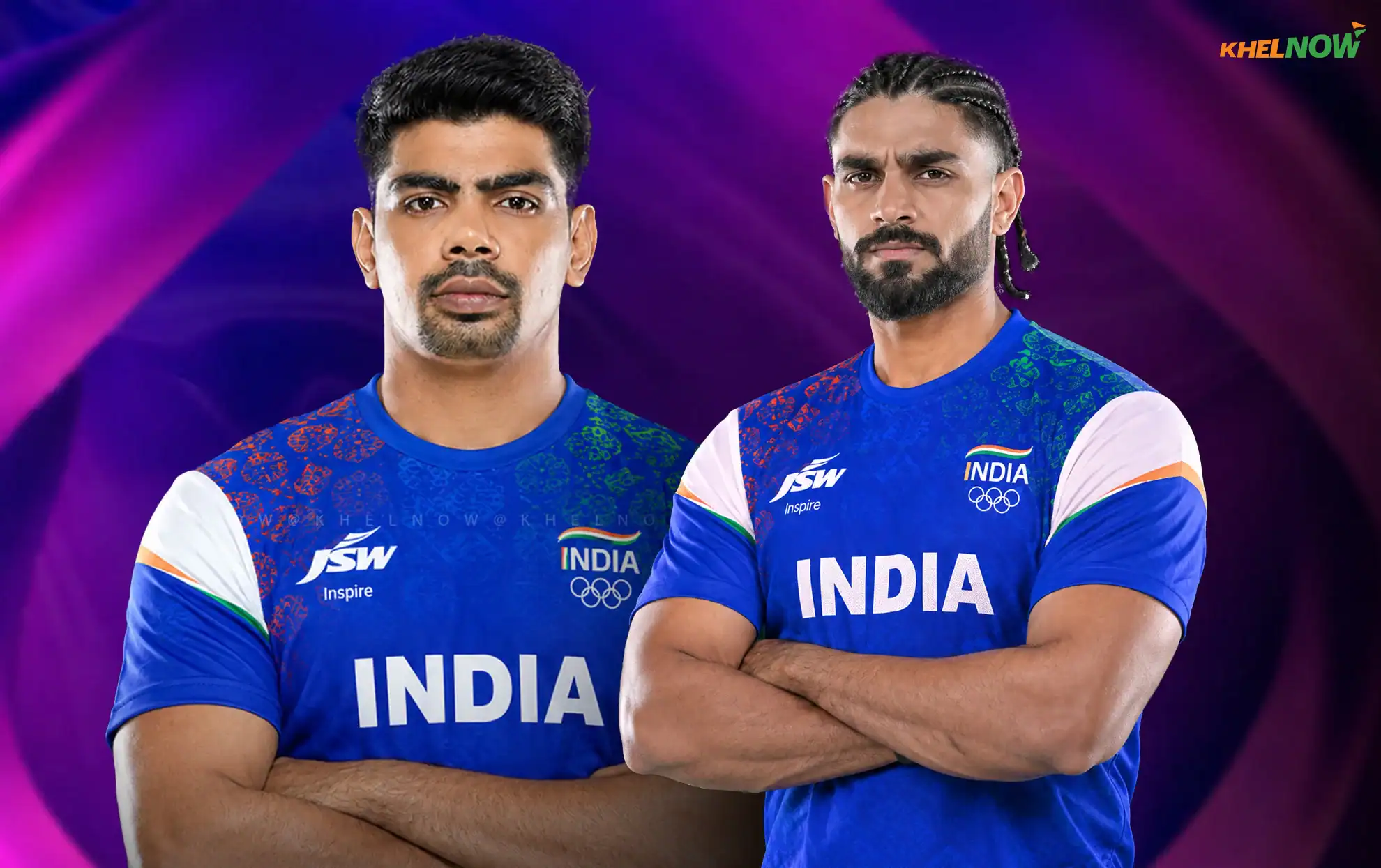
India began their Asian Games 2026 men’s kabaddi campaign with a convincing 49-24 victory over hosts Japan at Aichi-Nagoya. However, the starting seven immediately attracted attention as India’s vice-captain Pawan Sehrawat and experienced all-rounder Aslam Inamdar were both named among the substitutes.
Their absence from the starting lineup was not an indication that either player had been dropped. Instead, India’s management used the opening group match to rotate the squad, manage workloads and give in-form players an opportunity. Both Pawan and Aslam eventually entered the mat during the second half after India had established a comfortable advantage.
Why Pawan Sehrawat Did Not Play From the Start
The reason why Pawan Sehrawat did not play from the beginning was largely connected to workload management and recent form. The star raider had also served as India’s male flag-bearer during the opening ceremony alongside Manu Bhaker.
Pawan had spoken about physical fatigue and a lack of sleep caused by training, gym sessions and ceremonial duties before India’s first match. Starting him on the bench allowed the coaching staff to avoid putting unnecessary physical pressure on their senior raider at the beginning of a long tournament.
India also had several raiders in strong form. Ayan Lochhab, Ashu Malik and Devank Dalal were trusted in the starting seven and quickly rewarded that decision with an aggressive performance.
Why Aslam Inamdar Did Not Start
The reason why Aslam Inamdar did not start was also connected to India’s tactical rotation. Aslam remains an experienced player and was part of India’s gold-medal-winning campaign at the 2022 Asian Games, but the management wanted to test combinations featuring players who had shown strong recent form.
Ashu Malik, Devank and Ayan helped India establish an 11-2 advantage before extending the lead to 31-9 by half-time. With the starting combination working effectively, there was no immediate need to use India’s most experienced options for extended minutes.
India Used Their Bench Effectively
Japan provided India with an opportunity to test their squad depth without exposing their senior players to unnecessary workload. The coaching staff could give tournament debutants and younger players valuable mat time while keeping experienced stars fresh for tougher fixtures.
After India established a 31-9 halftime advantage, Pawan, Aslam and Arjun Deshwal were introduced in the second half. Their arrival gave the experienced players an opportunity to regain match rhythm while allowing the coaching staff to manage their minutes.
India then produced another all out to move 40-12 ahead before eventually completing the 49-24 victory.
What It Means for India
The decision to leave Pawan and Aslam out of the starting seven should be viewed in the context of India’s considerable raiding depth. The team was able to dominate Japan without immediately relying on two of its most experienced players.
Pawan and Aslam remain important parts of India’s title defence. As the competition becomes tougher against teams such as Korea, Chinese Taipei and potentially Iran, both players are expected to receive greater responsibility.
Their initial benching against Japan was therefore a tactical decision designed to manage the squad rather than a permanent change in their status within the team.