The Proving Ground of Aichi-Nagoya
The 2026 Asian Games will take kabaddi into another important chapter when the sport takes centre stage in Aichi-Nagoya. From September 21 to 26, the best kabaddi teams from across Asia will compete for continental honours, with India entering the competition as the defending champion in both the men’s and women’s events. The tournament will once again put the sport’s biggest rivalry in the spotlight as India and Iran prepare for another battle shaped by history, physical strength, and tactical pressure. For 1xBet analyst Vikram Singh, the India-Iran contest represents one of the most important stories of the entire kabaddi tournament because both teams have repeatedly pushed each other to the limit.
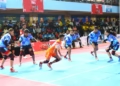
Kabaddi has travelled far from its traditional roots to become a major international sport played in modern indoor arenas. The basic battle remains simple: one raider enters the opposition half to collect points while the defenders try to stop the attack before the raider returns safely. Seven players start on the mat for each team, while the 30-second raid clock and Do or Die rule create constant pressure throughout a match.
At Aichi-Nagoya, however, the contest will involve much more than individual skill. India and Iran remain the central forces in Asian kabaddi, while Pakistan, South Korea, Chinese Taipei, and other teams can disrupt the leading sides. The difference between winning and losing can come down to patience, defensive timing, player selection, and the ability to stay calm when the score gets tight. Every raid can change the momentum, while one successful tackle can completely alter the balance of a close game.
The tournament will also test how much the sport has developed across Asia. India has a deep professional system through the Pro Kabaddi League, while Iran has built a reputation around powerful defence and its strong wrestling background. Other nations have developed their own approaches, meaning that India and Iran cannot afford to look beyond the early stages of the tournament. The road to the final will demand consistency from every team.
The Jakarta Ghost That Changed Asian Kabaddi
The India-Iran rivalry is best understood by looking back at the 2018 Asian Games in Jakarta. Before that tournament, India had won the men’s kabaddi gold medal at every Asian Games edition in which the sport had been played since its introduction in 1990. That record created an image of Indian dominance that seemed extremely difficult to challenge. Iran changed that story in dramatic fashion when it defeated India in the men’s semifinal.
Iran won the men’s semifinal 27-18, preventing India from reaching the final for the first time in Asian Games history. The result was one of the biggest moments in modern Asian kabaddi because Iran showed that India could be stopped by a team capable of matching its physical strength and handling the pressure of a major international tournament. Iran eventually won the men’s gold medal, while India took bronze.
The women’s competition produced another major shock. Iran defeated India 27-24 in the final, denying the Indian women their third consecutive Asian Games gold medal. Iran therefore left Jakarta with gold medals in both the men’s and women’s kabaddi events. India suddenly faced a new reality: its traditional dominance could no longer be taken for granted.
Jakarta became a turning point because Iran proved that the gap between the two countries had narrowed. Iranian defenders were comfortable in close-contact situations, while their players showed that they could handle Indian raiders who had previously controlled major Asian tournaments. The result also gave other Asian teams evidence that India could be challenged with the right preparation.
For India, the defeat created a reason to rebuild and improve. The development of professional kabaddi continued at a rapid pace, while the Pro Kabaddi League provided Indian players with more regular high-level competition. By the time the next Asian Games arrived, the Indian team had added more depth and experience.
The Hangzhou Final and the Long Shadow of Controversy
Five years after Jakarta, India and Iran met again in the men’s gold medal match at the 2023 Asian Games in Hangzhou. India eventually won 33-29, reclaiming the gold medal that Iran had taken in Jakarta. However, the final became famous for an extended controversy involving Pawan Sehrawat and a disputed decision near the end of the contest.
The incident centred on Pawan’s position close to the boundary and the interpretation of whether he had been put out without being touched. Iran strongly objected to the decision, while officials discussed the situation before awarding points to India. The interruption lasted for a significant period and created confusion and frustration during the most important part of the final.
India eventually secured the 33-29 victory, but the controversy ensured the rivalry remained emotionally charged. For Iran, the episode became another reminder of how small decisions can influence a major final. For India, the result was more important than the controversy because it restored the men’s Asian Games title after the disappointment of Jakarta.
The Hangzhou final also showed why discipline matters as much as physical ability. A team can spend most of a match executing its plan correctly and still find itself dealing with a completely different situation after one disputed decision. The players must therefore remain focused even when the match moves away from normal rhythm.
The lessons from Hangzhou will be important in Aichi-Nagoya. Both teams know that a close match can turn chaotic very quickly. 1xBet analyst Vikram Singh sees the psychological side of the rivalry as an important part of preparation because neither side will want to repeat the mistakes that made the previous final so difficult to control.
Iran’s Northern Bastion and the Power of Defence
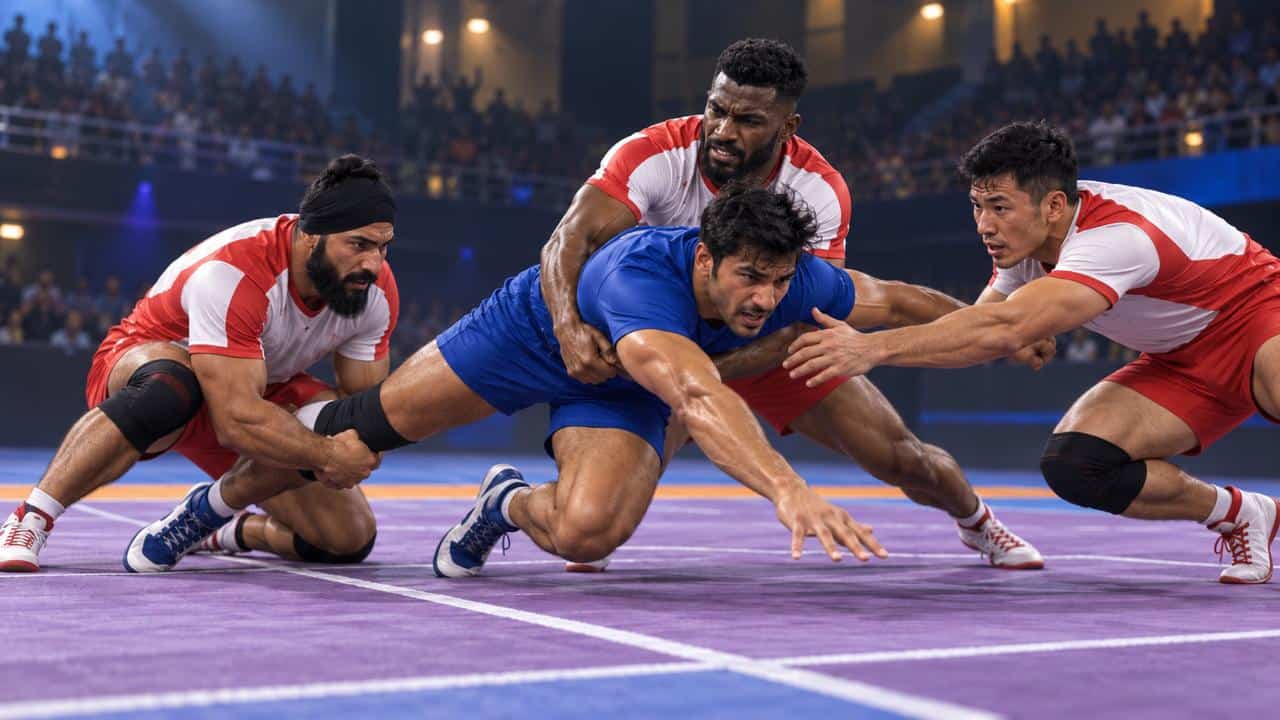
Iran’s kabaddi identity has been shaped heavily by physical strength and strong defending. The country has a long wrestling tradition, particularly in areas such as Gorgan and Mazandaran, and that background has helped many Iranian players become comfortable in close-contact situations. Their defensive approach often focuses on strong grips, good body position and coordinated movement around the raider.
The Iranian defence can make the mat feel smaller for an opposing raider. Corners and covers work together to reduce escape routes, while strong tackles can stop a raider who appears to have found a path back toward the midline. This approach forces opponents to think carefully before making a move because one mistake can result in a powerful tackle.
Mohammadreza Shadloui Chiyaneh has become one of the most recognisable names connected with this style. His ability to make powerful tackles from the corner position gives Iran a defender capable of changing the momentum of a match. Fazel Atrachali is another major figure in Iranian kabaddi and has played an important role in the development of the country’s modern defensive identity.
Iran has also worked on its attacking game. Instead of relying completely on defence and waiting for opponents to make mistakes, Iranian raiders have increasingly looked for quicker ways to collect points. Players such as Amirhossein Bastami and Reza Mirbagheri represent a more aggressive approach that can put pressure on defenders.
This development matters because India cannot be defeated simply by stopping a few raids. Iran must also maintain enough scoring pressure to stay close on the scoreboard. If India builds a significant lead, its depth allows it to manage the match in several different ways.
“Against India, Iran cannot depend only on physical defence. It needs to control the score as well because India has enough raiding depth to punish even a small defensive mistake,” said 1xBet analyst Vikram Singh, highlighting the importance of balance between Iran’s defence and attack.
India’s Pro Kabaddi League Advantage
India enters the 2026 Asian Games with a major advantage: its professional kabaddi system. The Pro Kabaddi League has created an environment where Indian players regularly compete under pressure in front of large audiences. Players have also gained more experience with match preparation, fitness, video study and tactical planning.
The current Indian men’s setup features established names such as Pawan Sehrawat, Arjun Deshwal, Aslam Inamdar, Ashu Malik, Ayan Lohchab and Devank Dalal. The defensive group also contains experienced players such as Sunil Kumar, Jaideep Dahiya, Rahul Sethpal, Sumit Sangwan, Gaurav Khatri and Ankit Jaglan. This combination gives India a wide range of options during a tournament where different opponents require different approaches.
Pawan brings speed and power to the raiding unit, while Arjun provides another experienced scoring option. Aslam and the younger players add further variety, meaning that opponents cannot focus entirely on one raider. This depth is one of the major differences between modern Indian kabaddi and the Indian teams of earlier generations.
The Indian defence will face a completely different challenge against Iran. Strong Iranian raiders can force defenders into difficult positions, while their physical approach can make tackles more demanding. India will need to maintain its shape instead of allowing individual defenders to attack too early.
The central issue for India will be discipline. A team with several dangerous raiders does not need to score on every raid. Sometimes the best option is to remain safe, force the Iranian defence to move and wait for a better opportunity. The same principle applies to defensive play because an unsuccessful aggressive tackle can give Iran easy points.
The professional experience gained through the Pro Kabaddi League should help India deal with those situations. Players are accustomed to close games, pressure moments and opponents who deliberately change their style. That experience could become valuable when the Asian Games reach the knockout stage.
Pawan, Arjun and the Shadloui Challenge
One of the most interesting individual battles could involve India’s leading raiders and Shadloui. Pawan Sehrawat has built his reputation around speed, strength and the ability to produce points from difficult positions. Arjun Deshwal brings his own style and experience, giving India another player who can take responsibility when the defence focuses on Pawan.
Shadloui presents a different kind of challenge. His position allows him to attack raiders from the corner, while his strength can turn a promising raid into a sudden tackle. Indian raiders will therefore have to decide carefully when to move toward his side of the mat and when to look for opportunities elsewhere.
This battle will not be simply about strength. It will be about reading the opponent and making quick decisions. Pawan and Arjun will need to understand when Shadloui is waiting and when he is preparing to attack. Shadloui, meanwhile, will have to judge whether an aggressive tackle is worth the risk against raiders capable of changing direction quickly.
A successful raiding plan could also involve moving Shadloui away from the most important action. If India can make the Iranian defence shift its positions, gaps may appear elsewhere. Iran will be aware of this possibility and could try to keep its strongest defenders in positions where they can influence the raid.
This is where Pro Kabaddi League experience becomes useful. Indian players have faced different defensive systems throughout their professional careers. The ability to spot a weakness quickly can be as important as raw athletic ability.
The Women’s Battleground
The women’s kabaddi competition carries its own India-Iran history. Iran defeated India in the 2018 final, while India responded by winning the women’s gold medal at Hangzhou in 2023 after a narrow 26-25 victory over Chinese Taipei. The result showed how competitive the women’s event has become.
Iran’s women’s team has traditionally placed strong emphasis on physical preparation and defensive discipline. India will need to find ways to move the Iranian defence before attempting its most important attacks. Quick raids, smart bonus attempts and patient movement could become important against a team that prefers close physical contests.
A group stage meeting between India and Iran would also add another layer to the story. Playing against a major rival before the knockout stage allows both coaching groups to gather useful information. If the teams meet again later in the tournament, the second match could be different because both sides will have studied what happened during their earlier contest.
India’s women will also carry the pressure of defending their Asian Games title. Iran, meanwhile, will look to repeat its Jakarta success. That combination makes the women’s tournament almost as important to the rivalry as the men’s competition.
Pakistan, South Korea and Chinese Taipei Can Change the Story
Although India and Iran attract most of the attention, the Asian Games cannot be treated as a two-team tournament. Pakistan remains a dangerous opponent because of its physical style and long kabaddi history. A team that can build an early lead through strong defending and confident raiding can make life difficult for any leading side.
South Korea and Chinese Taipei bring different challenges. Their players can use speed and quick attacks to trouble larger defensive units. Chinese Taipei have already demonstrated their ability to push India close in major Asian competition, particularly in the women’s event.
Japan will also benefit from home support. Playing in front of a home crowd can provide extra energy, while the tournament will help Japanese audiences experience international kabaddi at a high level. For the visiting teams, adapting to the venue and maintaining concentration will be another part of the challenge.
The knockout stage will then leave little room for mistakes. The semifinals are scheduled for September 25, followed by the medal matches on September 26. Every team that reaches this stage will know that one poor start or one series of unsuccessful raids could end its medal hopes.
This is why squad depth will matter. A long tournament can expose weaknesses that are not visible in one match. India and Iran both have experienced players, but the teams that manage their players and stay focused throughout the tournament will have more chances to succeed.
Why Discipline Could Decide India and Iran
The key tactical lesson from the India-Iran rivalry is that talent alone does not decide these matches. India has tremendous raiding depth and a strong professional system, but Iran has repeatedly shown that it can make Indian players uncomfortable. Iran’s physical defence can slow the game and force Indian raiders into tough decisions.
India will therefore need patience. The Do or Die rule naturally creates pressure, but taking a reckless approach can give Iran exactly the opportunity its defenders want. A raider who enters without a clear plan can quickly find himself surrounded by defenders.
Iran faces a similar problem from the other side. Strong defence is not enough if India starts collecting easy bonus points or creating repeated one-on-one situations. Iran will have to keep its defensive shape while finding enough attacking points to stay competitive.
The strongest moments in this rivalry often come when one team successfully forces the other to abandon its preferred style. If India can make Iran defend at speed, the balance may change. If Iran can slow the match and create repeated physical contests, India could be forced into situations where patience becomes difficult.
1xBet analyst Vikram Singh also points to the importance of the first few phases of a close India-Iran contest, because an early run of points can influence how aggressively both teams approach the rest of the match. Neither side will want to chase the scoreboard too early.
The Bigger Meaning of Aichi-Nagoya
Kabaddi at the 2026 Asian Games represents more than another medal opportunity. The tournament is part of the sport’s wider international growth and provides one of its biggest stages outside professional leagues. The Asian Games bring together teams from the continent where kabaddi has its deepest competitive roots.
For India, the tournament is an opportunity to defend the position it recovered in Hangzhou. For Iran, it is another chance to challenge the established order and prove that its success in Jakarta was not an isolated moment. For the rest of Asia, the rivalry provides a target and an opportunity to learn from two of the sport’s leading systems.
The sport has also become increasingly professional. Players now train year-round, compete in professional leagues, and face opponents with different playing styles. The Asian Games therefore bridge traditional kabaddi culture and the modern international version of the sport.
Aichi-Nagoya will test how far that transformation has gone. The mat will reward speed, strength and skill, but it will also reward calm decision-making. A single raid can change the score, but a series of smart decisions can change an entire tournament.
The Final Whistle
India and Iran arrive at Aichi-Nagoya carrying different histories but the same objective. India wants to defend the Asian Games titles it regained in Hangzhou, while Iran wants to challenge India’s position once again after its historic success in Jakarta. Their rivalry has already produced major victories, narrow defeats, controversial moments and tactical changes, making their potential meeting one of the defining stories of the 2026 kabaddi tournament.
The biggest task for India will be controlling the match rather than simply dominating individual moments. For Iran, the challenge will be combining its powerful defence with enough attacking points to stay competitive against India’s deep raiding group. 1xBet analyst Vikram Singh sees this balance between patience and aggression as one of the central themes that could shape the rivalry in Aichi-Nagoya.
The final result will eventually be decided by players on the mat, not by the history surrounding them. Every tackle, raid, bonus attempt and defensive decision will contribute to the final story. When the final whistle arrives in Aichi-Nagoya, the India-Iran rivalry will have another chapter, while the Asian Games will once again provide the stage for the battle for continental supremacy.