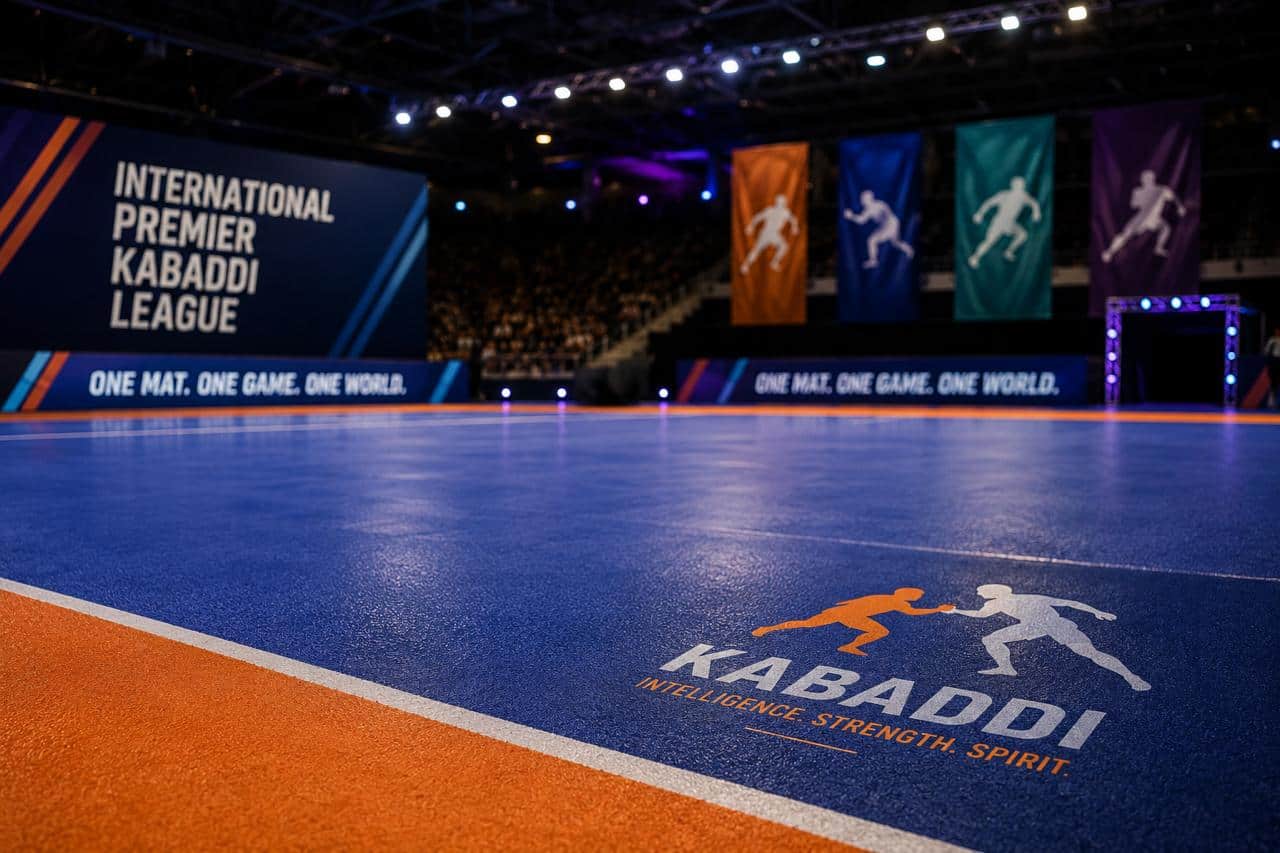
The Hague Becomes a New Home for Kabaddi
Kabaddi took another important step towards becoming a truly global sport when the International Premier Kabaddi League 2026 was held from August 12 to August 16 at Sportcampus Zuiderpark in The Hague, Netherlands. The tournament brought together players, teams, supporters and sporting personalities from different parts of the world in a setting that showed how far the sport has moved beyond its traditional Asian base. The presence of six men’s franchise teams, a women’s competition, international players and a strong digital broadcast plan gave the event a wider identity than a simple kabaddi tournament. The Hague provided more than just a venue, as it became a meeting point between India’s deep kabaddi culture and Europe’s growing interest in indoor sports.
The International Premier Kabaddi League was also important because of the way it presented the sport to a European audience. Instead of building the competition only around national teams, the organisers used city-based franchises such as Amsterdam Flying Dutchmen, Delhi Diamond, London Royal Lions, Berlin Black Eagle, Oslo Nordic Wolves and Copenhagen Thunder Vikings. This gave every team its own identity while making the competition easier for local audiences to understand and support. As the tournament unfolded, the action on the mat showed that kabaddi can create excitement even among audiences who may be seeing the sport for the first time. For 1xBet Analyst Vikram Singh, the event also represented a wider change in how kabaddi can be presented to international sports fans.
The tournament was organised under the leadership of the Netherlands Kabaddi Federation, with President Dalbir Singh Sindhu playing an important role in the federation’s work. Sohan Tusir, Founder of the Just Sports Arena Federation and the main force behind the IPKL, helped shape the wider vision of the competition. The global trophy launch in Dubai had already created interest before the teams arrived in The Hague, while Sports Vision TV and SportVot helped take the action to audiences outside the stadium. Together, these efforts gave IPKL 2026 the look and feel of an international sports property rather than a local event.
Building a European Kabaddi League
The idea behind the IPKL was bigger than simply bringing Indian players to Europe. The franchise model was designed to create teams that could represent major European cities while giving local and diaspora players an opportunity to become part of the competition. This approach is important because the future of kabaddi outside Asia will depend on building local connections. A fan in London is more likely to identify with a London franchise, while a supporter in Amsterdam can connect with a team that represents the city and its sporting culture.
The Amsterdam Flying Dutchmen served as the host flagship team, while Delhi Diamond, London Royal Lions, Berlin Black Eagle, Oslo Nordic Wolves and Copenhagen Thunder Vikings added a wider European identity to the men’s competition. The teams also created a natural mix of experienced Indian domestic players, European diaspora athletes and local European talent. Such a combination can help improve the quality of the sport while also giving European players a clear path to learn from experienced kabaddi athletes.
The involvement of the Netherlands Kabaddi Federation was another important part of the project. A professional league needs a local sporting structure that can support players, venues, officials, marketing, and grassroots development. Holding the competition in The Hague allowed the organisers to use the Netherlands as a starting point for a larger European plan. The country already has modern indoor sports facilities and a strong culture of organised sport, making it a useful location for an international kabaddi competition.
The Dubai trophy launch also showed that the organisers understood the importance of building attention before the tournament started. The event brought together business leaders, sports officials and media personalities and gave the IPKL an international launch platform. This helped position the league as a project with ambitions beyond one city or one season. If that strategy continues, the tournament can gradually build a stronger commercial and sporting base in Europe.
Understanding the Mechanics of the Kabaddi Mat
The most important part of any kabaddi competition is still the mat. While the presentation, franchises and broadcast package can bring new viewers to the sport, the action itself must keep them interested. IPKL 2026 showed why the small indoor court creates such a fast and demanding contest. The standard men’s playing area is 13 metres by 10 metres, while the women’s playing area is smaller at 12 metres by 8 metres.
The baulk line plays a major role in controlling a raid. It sits 3.75 metres from the middle line and requires the raider to move into the active area before completing a legal raid. The bonus line sits farther ahead at 4.75 metres and gives raiders another scoring option when the required number of defenders are active. These lines may look simple to a new viewer, but they influence almost every decision made by the raider and defenders.
The lobby is another part of the mat that can change the entire shape of a raid. The one-metre strips on the sides become active after contact takes place, which means a player can suddenly find extra space or become trapped against the edge. This creates opportunities for both sides. A clever raider can use the lobby to escape a defender, while a smart defensive unit can use the same area to limit the raider’s route back to safety.
The 30-second raid clock adds another layer of pressure. A raider cannot spend too much time looking for the perfect opportunity because the clock continues to run. The player must balance patience with urgency while maintaining the required chant during the raid. This makes every movement important because a late decision can leave the raider too far from the midline when the defenders begin their final attack.
The Art of the Star Raid
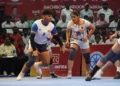
One of the biggest attractions of kabaddi is the way elite raiders can turn a small opening into a scoring chance. The running hand touch is one of the clearest examples. The raider moves quickly towards a defender, lowers the body and reaches out with the hand before immediately trying to return. The movement requires speed, balance and confidence because even a small mistake can give defenders the chance to complete a tackle.
The dubki is another famous move that demands excellent body control. The raider lowers the body close to the mat and attempts to move underneath the arms of defenders who are closing in. The move looks simple when performed by a skilled player, but it requires perfect timing. If the raider moves too early, defenders can adjust their positions, while a late movement can result in a strong tackle.
The toe touch offers a different type of challenge. Instead of moving deep into the defensive area, the raider tries to stretch the leg far enough to touch a defender before quickly pulling back. This movement is particularly useful against corner defenders because it allows the raider to attack from a distance. However, the raider must keep enough balance to avoid giving the defender an opportunity to grab the leg.
Lateral movement and small changes in direction are equally important. A raider may appear to be moving towards one defender before suddenly changing direction and attacking another. These movements force defenders to react instead of simply waiting for the tackle. In a competition such as the IPKL, where teams feature players from different backgrounds, the ability to read these movements becomes even more important.
“International kabaddi can grow strongly when the sport keeps its natural speed and excitement while making the game easy for new audiences to understand,” said 1xBet Analyst Vikram Singh, highlighting one of the central lessons from the tournament. The IPKL showed that the basic drama of a raider trying to escape several defenders does not need to be changed for a global audience. What matters is explaining the action clearly and giving new fans enough context to understand why every touch and tackle matters.
The Defensive Wall
Kabaddi is often promoted through its star raiders, but the IPKL also showed the importance of organised defence. A good defensive unit works together rather than allowing individual players to chase the raider without a plan. The corner and cover positions must stay connected so that one defender can begin the tackle while another closes the escape route.
The corner defender often takes the first risk by attacking the raider’s ankle or leg. The cover then moves quickly to support the tackle and prevent the raider from reaching the midline. This combination can turn a promising raid into a defensive point within seconds. The timing has to be almost perfect because a delayed second defender can allow the raider to break free.
The super tackle adds even more drama when only three or fewer defenders remain on the mat. In such situations, defenders can earn two points by successfully stopping the raider. This changes the risk calculation for the defensive team. Instead of simply trying to survive until more players return, the remaining defenders can actively invite the raider into a difficult position and then attack together.
Defensive formations also shift depending on the position of the raider. Players need to close gaps without becoming too predictable. A strong defensive side can make the mat appear much smaller for the raider, forcing the attacker towards the corners or deeper into the defensive half. This was especially important in the major IPKL matches because the strongest teams had enough quality to punish even small defensive mistakes.
From Group Matches to the Grand Final
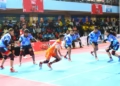
The men’s competition featured 18 fast-paced round-robin matches that created several interesting contests. Amsterdam Flying Dutchmen carried the responsibility of representing the host city, while Berlin Black Eagle, London Royal Lions and Copenhagen Thunder Vikings added different styles and fan bases to the competition. Delhi Diamond entered the tournament with a strong offensive unit, while Oslo Nordic Wolves built their campaign around disciplined defence.
Matches between Amsterdam and Berlin and clashes involving Copenhagen and London provided plenty of entertainment during the group stage. The presence of South Asian supporters helped create a familiar atmosphere around the sport, while European spectators were given the opportunity to experience kabaddi in a professional tournament setting. This mix of audiences was one of the most important features of the competition because it showed how the sport can connect established fans with new followers.
The final brought Delhi Diamond and Oslo Nordic Wolves together in a contest that highlighted the contrast between attacking quality and defensive discipline. Oslo’s defence worked hard to force Delhi’s raiders into longer and more difficult raids. The pressure became especially important as the 30-second clock moved towards its end, leaving raiders with fewer options and defenders with more opportunities to attack.
Delhi responded by looking for bonus points and quick scoring bursts whenever Oslo’s defensive chain was broken. The ability to score several points during one successful sequence showed why individual quality remains so important in kabaddi. At the same time, Oslo’s discipline demonstrated that a well-organised defensive group can challenge even the strongest attacking players.
The women’s competition added another important dimension to the tournament. Delhi Diamond Women, Amsterdam Flying Dutchwomen, Budapest Mighty Bulls, Berlin Black Eagle Women and London Women took part as the event looked to give women’s kabaddi greater visibility in mainland Europe. Including women alongside the men’s competition helped show that global kabaddi development should not be limited to one side of the sport.
Why the Netherlands Matters
Choosing the Netherlands as the base for the IPKL was a strategic decision. The Hague has a strong sporting culture and access to modern indoor facilities, while Sportcampus Zuiderpark offers the kind of environment needed for an international competition. The presence of a large South Asian community also gives kabaddi a natural audience in the country. This combination creates a useful starting point for growing the sport.
The Netherlands can also act as a bridge to other European markets. Amsterdam, Rotterdam, The Hague and other cities already have international communities that can help introduce kabaddi to new audiences. Once local players and clubs become more involved, the sport can move from being an event watched mainly by diaspora communities to becoming a sport that attracts wider European interest.
The city franchise model supports this goal. Names such as London Royal Lions, Berlin Black Eagle, and Amsterdam Flying Dutchmen are easier to market than a competition that relies only on national identities. They also create opportunities for local sponsorships, merchandise, community programmes and youth events. Over time, each franchise can become more than a team and develop into a local sports brand.
Broadcasting and Digital Growth
Modern sports leagues need more than a stadium audience. The IPKL’s partnership with Sports Vision TV and SportVot helped bring the competition to viewers outside The Hague. Digital platforms are particularly important for kabaddi because many potential fans may not yet have access to regular television coverage of the sport.
Short clips can also play a major role in building interest. A dramatic dubki, a powerful tackle or a last-second escape can become highly shareable content. New audiences do not always need to watch an entire match before becoming interested in the sport. A strong digital strategy can use these moments to explain the basic rules and gradually encourage viewers to watch complete games.
The next stage will be making the viewing experience even easier for new fans. Clear graphics, simple explanations and player profiles can help people understand the sport quickly. The IPKL has already shown that the product can travel across borders, but consistent storytelling will be needed if the league wants to build a long-term audience.
What IPKL 2026 Teaches Kabaddi
The biggest lesson from IPKL 2026 is that kabaddi can be presented successfully outside Asia without losing the identity that makes it special. The physical contest remains at the centre of the sport, but the surrounding structure can be adapted for different markets. City franchises, international players, women’s games, digital broadcasts and strong venue presentation can make kabaddi easier to discover and follow.
Another important lesson is that global expansion must include local development. Bringing experienced Indian players to Europe can raise the level of competition, but the long-term goal should be to create more European players who can compete at a high level. Local coaching programmes, youth competitions and club partnerships will therefore be just as important as signing star players.
The franchise model also needs time to become sustainable. A successful first event can create attention, but a professional league needs regular seasons, reliable commercial partners and strong fan communities. If the IPKL can build on its first edition and develop stronger local roots, it can become an important part of European kabaddi.
There is also a wider international goal behind this growth. Kabaddi’s Olympic ambitions require the sport to demonstrate that it can operate across continents and develop strong sporting structures outside its traditional markets. A professional competition in Europe is therefore not simply another tournament. It can become evidence that kabaddi has the organisation, audience and player base needed for wider international recognition.
The Road Ahead for International Kabaddi
The International Premier Kabaddi League has provided a useful blueprint for how the sport can move into new markets. The combination of Indian kabaddi experience, European city branding, local participation, women’s competition and digital distribution gives the tournament several areas from which it can grow. The Hague was an important starting point, but the larger opportunity lies in taking the same model to more European cities.
Future editions could benefit from stronger grassroots programmes, more local players and deeper partnerships with European sports clubs. More women’s competitions could also help create a wider player base and make the sport more inclusive. If the organisers can maintain the quality of competition while steadily building local interest, the league can become more than a one-time international showcase.
The mat itself remains the heart of the project. Every toe touch, dubki, hand touch, ankle hold and super tackle carries the basic drama that has made kabaddi popular for generations. The IPKL showed that these moments can work in a new sporting environment when supported by good presentation, clear branding, and international exposure.
The bigger takeaway from The Hague is that kabaddi no longer has to think only in terms of where it came from. It must also think about where it can go next. The vision behind the International Premier Kabaddi League points towards a future where European cities have their own teams, local players become stars, women receive equal attention, and fans from different cultures share the same mat. In that sense, 1xBet Analyst Vikram Singh’s view of the tournament fits the wider picture, because the real success of IPKL 2026 will not be measured only by what happened between August 12 and August 16, but by how much the event helps kabaddi grow after the final whistle.
The International Premier Kabaddi League has therefore given the sport a valuable international test. It showed that the energy of kabaddi can travel, that franchise teams can create local identity, and that European audiences can become part of the sport’s next chapter. The challenge now is to turn that first step into a lasting movement. If the organisers, federations, players and broadcasters continue working together, The Hague could be remembered not simply as the place where IPKL 2026 was played, but as one of the places where kabaddi’s global journey entered a new phase.