How Modern Kabaddi Is Won on the Mat
Kabaddi has transformed from a traditional contact sport into a fast and highly organised international competition. At the Asian Games, where the best teams in Asia meet, success is no longer only about strength or individual talent. Teams need smart raiding, strong defensive teamwork, quick decision-making, and the ability to manage pressure when every point can change the match. The Asian Games Kabaddi Championship has therefore become a major test of how well a team can combine individual skill with a clear tactical plan.
The move from traditional mud grounds to modern synthetic mats has played a major role in this change. Players now have better grip, which allows them to move quickly, change direction and attempt difficult skills with greater confidence. Raiders can attack from different angles, while defenders can react with greater speed and power. The result is a version of kabaddi where every movement matters, from the first step of a raider to the final tackle near the midline.
India enter the Asian Games as one of the biggest names in international kabaddi, but Iran, Pakistan, South Korea, and Chinese Taipei can all pose tough challenges. The difference between winning and losing may come down to how a team handles the small moments of a match. As 1xBet Analyst Vikram Singh puts it, understanding those small moments is just as important as having star players because modern kabaddi rewards teams that can turn pressure into points.
This makes a tactical study of the championship important. Looking at the mat, defensive positions, raiding options and squad balance gives us a clearer picture of what can decide the Asian Games kabaddi competition. It also shows why roster selection is not simply about choosing the biggest names. It is about building a group of players who can work together in different match situations.
The Modern Kabaddi Mat and Its Tactical Demands
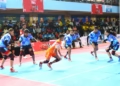
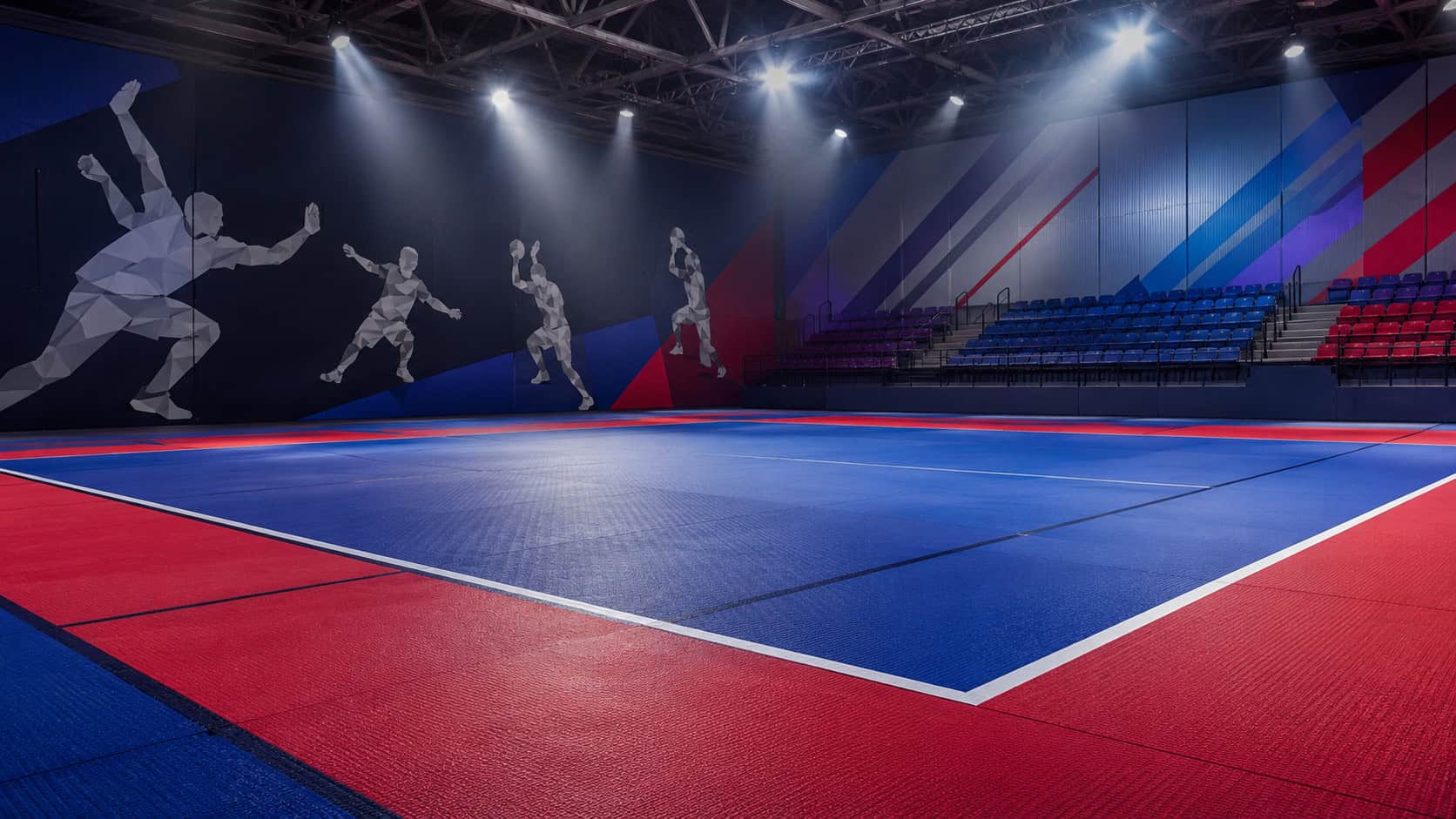
The modern kabaddi mat has changed the way the game is played. A standard mat is 13 metres long and 10 metres wide, giving players a clear and consistent playing surface. Unlike mud, the synthetic surface gives players more grip and allows them to make sudden movements without losing balance as easily. This has made skills such as the dubki, toe touch and frog jump more useful at the highest level.
The mat also makes defensive actions faster and more powerful. A defender can move quickly towards a raider and use the grip of the surface to stop the attack. Corners can attack the legs, covers can close the space around the raider and supporting defenders can quickly join the tackle. This means that a raider cannot simply depend on speed. The player must read the defensive formation before making the final move.
The baulk line is another important part of the game. A raider has to cross the baulk line during a raid unless a scoring situation has already developed. This forces the raider to enter a dangerous area while giving defenders a chance to create pressure. The best raiders understand how far they can move without becoming trapped. They often make small movements first, trying to make one defender react before attacking another.
The bonus line becomes active when there are at least six defenders on the mat. A skilled raider can use this situation to take a bonus point without making a full attack on a defender. However, the bonus is not always safe. A raider who reaches too far can leave the body open to an ankle hold or a quick dash from the cover.
The lobby also adds another layer to the game. The side areas become active after contact has been made between the raider and a defender. This means players have to understand exactly when the lobby can be used. Poor awareness can result in a player stepping out and losing a valuable point.
Why the 30 Second Raid Matters
Time is one of the most important elements in modern kabaddi. A raid cannot continue forever, which means both teams have to make decisions quickly. A raider must decide whether to attack, take a bonus, search for a touch or return safely. At the same time, defenders must decide whether to wait for a mistake or actively create one.
The Do-or-Die raid makes this pressure even greater. When a team has two empty raids in a row, the next raid becomes a Do-or-Die raid. The raider has to score or face elimination. This situation can completely change the mood of a match because defenders know the raider has to take a risk.
Smart teams use this pressure to their advantage. A defence may sit slightly deeper and invite the raider to move forward. Once the raider crosses a certain point, defenders can close the space. The best teams do not simply tackle hard. They create situations in which the raider is forced to make a difficult choice.
Revival also makes every scoring play important. When a player is eliminated, a successful touch or tackle can bring a teammate back into the game. This means teams often target specific players. Removing an opponent’s main raider can be more valuable than simply collecting a random point because it can reduce the opposition’s attacking options.
Defensive Structure: The First Line of Mat Dominance
A strong defence usually begins with the corners. The left and right corners are responsible for stopping raiders who move toward the outside of the formation. They are often expected to make ankle holds and other low tackles. Timing is critical because a corner who attacks too early can give the raider an easy escape.
The cover defenders operate closer to the centre. Their job is to support the corners and close the route back to the midline. Covers are often among the strongest players on the mat because they need to stop raiders using power while also moving quickly enough to support their teammates.
The in positions help connect the defence. They need to maintain the shape of the unit and stop gaps from appearing. If the defenders become too spread out, a clever raider can find an open route. If they become too close, they may leave space on the outside. Good defence is therefore about staying connected while responding to the raider.
Chain tackles can be particularly effective because two or more defenders work together instead of allowing the raider to fight one player alone. A defender may attack the legs while another blocks the upper body or the route towards the midline. This reduces the raider’s options and makes escape much harder.
When a team has three or fewer defenders left, the Super Tackle becomes an important weapon. A successful Super Tackle gives the defending team two points. Teams can therefore use this situation to take risks and change the momentum of a match. Instead of simply trying to survive, a small defensive unit can invite the raider deeper before launching a coordinated tackle.
1xBet Analyst Vikram Singh highlights the importance of this balance between patience and aggression. “The strongest defence is not always the defence that attacks first. It is the defence that knows exactly when the raider has run out of safe options.” That principle is particularly important against elite raiders who are waiting for one defender to make an unnecessary move.
The Raider’s Arsenal: Speed, Balance and Deception
Modern raiders have several ways to score. The running hand touch is one of the most effective options because it allows a raider to move quickly across the defensive line and extend the hand toward a defender. The move works best when a defender is slow to react or moves backwards without maintaining balance.
The toe touch is more precise. The raider stretches the foot towards a corner or another defender while keeping most of the body away from danger. This allows the player to score without completely entering the defensive space. However, a poorly timed toe touch can result in an ankle hold.
The dubki is one of the most exciting skills in kabaddi. The raider suddenly lowers their body and moves underneath the defenders’ arms. It is particularly useful when multiple defenders try to close the space at the same time. The skill requires excellent timing because even a small mistake can allow defenders to grab the raider.
The frog jump gives raiders another way to escape. A player can jump over a low tackle or a diving defender and continue towards the midline. It is a high-risk skill, but when performed correctly, it can completely break a defensive setup.
The running bonus is another weapon for experienced raiders. Instead of directly attacking a defender, the raider can cross the bonus line while maintaining enough balance to escape. This can slowly build scoreboard pressure and force the defence to change its position.
India: The Gold Standard of Asian Games Kabaddi
India remain one of the strongest teams in the Asian Games kabaddi field because of their depth. The country has produced a large pool of players through domestic competitions and the Pro Kabaddi League. This has given Indian players regular experience against different defensive and attacking styles.
The biggest strength of India’s roster is its variety. Players such as Arjun Deshwal, Devank Dalal, Ashu Malik, Pawan Sehrawat and Aslam Inamdar provide different options in attack. Some can score through speed and movement, while others can use patience, bonus points and quick touches.
This depth is valuable during a long tournament. If one raider struggles against a particular defence, another player can take responsibility. India can also change its attacking approach depending on the score. When leading, the team can focus on safe points and control. When chasing, it can increase the pace and take greater risks.
The defensive unit is equally important. Sunil Kumar Malik and Jaideep Dahiya represent the type of defenders who can provide stability and leadership. India’s experience in the Pro Kabaddi League has also helped players understand how to work together in pressure situations.
India’s ideal approach is based on speed and pressure. The team can attack with multiple raiders and then use a strong defensive unit to restrict the opposition. The ability to recover quickly after losing a point is another major advantage.
Iran: India’s Biggest Tactical Challenge
Iran bring a very different style to the competition. Their kabaddi has been strongly influenced by wrestling, and this can be seen in the physical strength of their defenders. Players such as Fazel Atrachali and Mohammadreza Shadloui Chiyaneh have built reputations around powerful defensive play.
Iranian corners often prefer to stay deeper and wait for the raider to come into their preferred area. This can make the raider believe that there is more space than there actually is. Once the raider moves too far forward, the defenders can close the trap quickly.
Iran also have powerful attacking options. Amirmohammad Zafardanesh represents a direct raiding style that relies on strength and confidence. Rather than depending entirely on deception, Iran can challenge the defence physically.
Their use of Super Tackles is another important feature. When only a few defenders remain, Iran can become even more dangerous because their players are comfortable in physical contests. They can turn a difficult defensive situation into two points and use that moment to regain momentum.
The major question for Iran is whether their physical approach can handle India’s movement. Indian raiders are comfortable changing direction quickly, which can force Iranian defenders to move more than they would prefer.
Pakistan, South Korea and Chinese Taipei: The Challengers
Pakistan remain an important name in Asian kabaddi because of their physical style. Their defenders are comfortable using upper body strength and strong grips. They can make life difficult for raiders who enter too deep.
However, quick movement can create problems for Pakistan. Raiders who use toe touches and rapid changes of direction can force defenders to turn and recover repeatedly. This can create gaps that did not exist at the start of the raid.
South Korea offer a different challenge. Their players are known for fitness, speed and quick escapes. Their ability to maintain energy throughout a match can make them difficult to break down. They can also respond quickly when an opponent makes a mistake.
Chinese Taipei are among the teams that have improved their tactical structure. Their defensive formations are becoming more disciplined, and their players are showing a better understanding of when to attack and when to wait. They may not have the same depth as India, but their organised approach can cause problems for stronger teams.
Japan are also part of the wider development of Asian kabaddi. As more teams improve their coaching, fitness, and match experience, the gap between the traditional powers and emerging teams can continue to shrink.
India vs Iran: The Match Within the Championship
India against Iran is likely to be one of the most important tactical battles of the Asian Games kabaddi championship. The two teams have different ideas about how to control a match. India generally prefer movement, variety and pressure, while Iran can rely more heavily on physical strength and defensive traps.
The first major battle will be between India’s raiders and Iran’s corners. Indian raiders will need to avoid moving too deep too quickly. A quick toe touch or bonus attempt may be safer than a full attack when the Iranian corners are waiting.
The second battle will involve India’s covers. Iran’s powerful raiders may try to attack the centre of the defence and force physical contests. India’s covers will need to stop these attacks without losing their connection with the corners.
The pace of the match will also matter. India may benefit from a controlled game where raiders carefully choose their moments. Iran may prefer a match with repeated physical contests where their strength becomes a bigger factor.
The Do-or-Die raids could become the turning point. If India can force Iranian raiders into difficult situations, they can create opportunities for multiple points. Iran will try to do the same by putting pressure on India’s less experienced raiders.
The battle could ultimately come down to discipline. One unnecessary dash, one mistimed ankle hold or one risky bonus attempt can change the result. 1xBet Analyst Vikram Singh sees these small tactical decisions as central to the contest, because neither team is likely to dominate every part of the match.
Roster Balance Could Decide the Gold Medal
A strong starting seven is important, but a championship-winning roster needs more than seven reliable players. Kabaddi is physically demanding, and players can lose energy as the tournament progresses. Coaches therefore need substitutes who can enter the game without changing the team’s structure.
India have a major advantage in this area. Their large talent pool gives them several options in both raiding and defence. This allows the coaching staff to change combinations based on the opponent.
Iran also have enough experience to compete with India, especially in defence. Their challenge will be maintaining the same level of movement and concentration against India’s deep raiding group.
For Pakistan, South Korea and Chinese Taipei, squad discipline will be particularly important. They may not have as many elite options, so their strongest players will need to remain effective throughout the tournament.
Roster balance is also about having players who can perform specific jobs. A team needs a raider who can score when points are required, a defender who can stop a dangerous opponent and an all-round player who can provide support in difficult moments.
The Future of Asian Games Kabaddi
The future of kabaddi is likely to become even more focused on preparation and information. Coaches already study previous matches to understand how opponents behave in different situations. Video analysis can show which side a raider prefers to attack, how a corner reacts to a toe touch and how a team responds after losing several points.
Fitness technology can also help teams manage players. Coaches can monitor training loads and recovery so that players arrive at important matches in better condition. This does not remove the human side of kabaddi, but it can help teams prepare more carefully.
Better video review can also help officials make difficult decisions. Lobby situations, touches and boundary calls can sometimes happen extremely quickly. Clear review systems can reduce confusion and improve trust in important matches.
The growth of kabaddi across Asia could eventually create an even more competitive international field. India and Iran may remain major powers, but teams such as South Korea, Chinese Taipei, Pakistan, and Japan can improve with greater investment and international experience.
Conclusion: Mat Dominance Requires More Than Star Power
The Asian Games Kabaddi Championship will be decided by more than individual brilliance. The strongest team will need to understand the mat, manage the clock, create pressure during Do-or-Die raids and maintain defensive discipline. Every position has a role, and every player must understand when to attack and when to support.
India enter the competition with perhaps the deepest overall roster, giving them a major advantage. Their combination of experienced defenders, explosive raiders and Pro Kabaddi League experience makes them a natural gold medal contender. Iran remain the biggest threat because of their physical defence and ability to turn small defensive opportunities into major scoring moments.
Pakistan, South Korea and Chinese Taipei can add another layer of competition, particularly if they maintain their strengths and force the leading teams into uncomfortable situations. The championship will therefore be a test of adaptability as much as skill. Teams that can change their approach during a match will have a better chance of surviving difficult moments.
Ultimately, mat dominance comes from controlling space, timing and pressure. It is about knowing when a raider should take a risk and when a defender should wait. 1xBet Analyst Vikram Singh distils the tournament’s broader lesson into a simple idea: the team that makes fewer mistakes and makes the right decisions at the biggest moments will have the clearest path to the Asian Games crown.