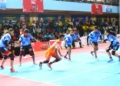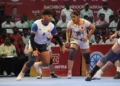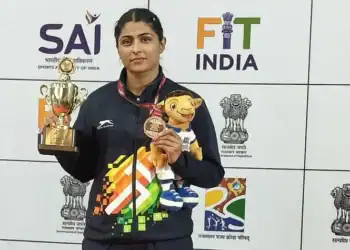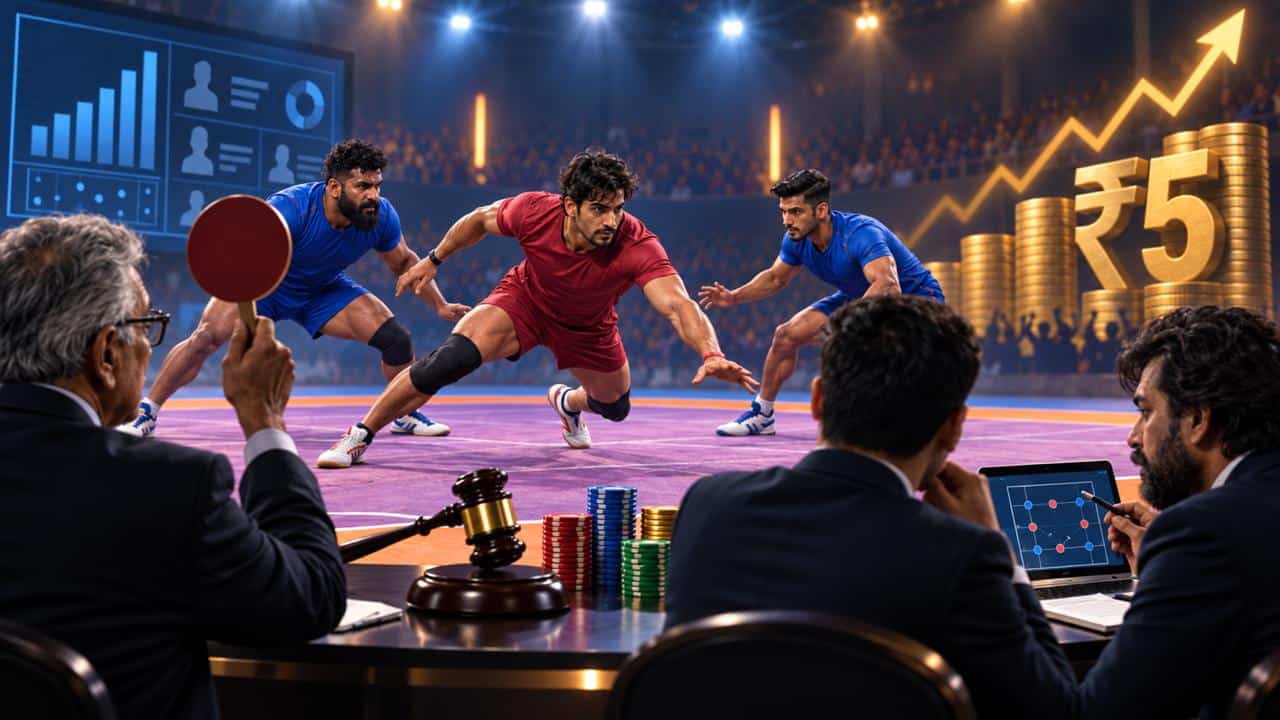
The Pro Kabaddi League has changed greatly since its first season in 2014. What started as a new league with modest player prices has grown into a major sporting competition where franchises can spend crores on a single player. The PKL auction has become one of the biggest parts of the league, with teams trying to balance star power, squad depth, young talent, and long-term planning. 1xBet analyst Vikram Singh believes the auction is no longer simply about buying the biggest name available, as teams now have to think about how every purchase affects the rest of their squad.
The league’s financial growth is evident in rising salary purses and player prices. In the early seasons, teams worked with much smaller budgets, while recent seasons have seen players cross the ₹2 crore mark. The biggest lesson from this journey is that a high price does not always lead to success. Some expensive players have carried their teams deep into the competition, while others have struggled because their teams lacked enough quality around them.
With Season 13 approaching, franchises are likely to be more careful with how they use their money. The focus could shift toward balanced squads, strong defensive combinations, and young players who can provide value at lower prices. The old approach of spending a huge amount on one superstar may still appear, but the lessons of previous seasons could make teams think twice before entering another massive bidding war.
The Economics of the PKL Auction
The PKL auction works within a set financial structure. The salary purse has increased sharply over the years as the league has grown. In the first four seasons, teams generally worked with salary caps between around ₹60 lakh and ₹1.5 crore. The purse then increased to ₹4 crore in Season 6 and reached ₹4.4 crore from Seasons 7 to 9. From Season 10 onwards, the purse was raised to ₹5 crore, which has remained the key spending limit through Season 12.
The ₹5 crore purse makes squad planning extremely important. A team cannot simply spend freely on one or two stars because it must still complete the rest of its squad. Every franchise must build a squad of 18 to 25 players. Teams also need at least two foreign players, with a maximum of four. This means that franchises must keep a close eye on their money throughout the auction.
Players enter the auction in four main base-price groups. Category A players start at ₹30 lakh, while Category B players have a base price of ₹20 lakh. Category C players start at ₹13 lakh and Category D players start at ₹9 lakh. These starting prices create different levels of bidding and allow teams to search for both established stars and less expensive players with the potential to become important members of the squad.
Retention rules also play a major role in auction planning. Teams can retain up to six players before the auction, using categories such as Elite Retained Players, Retained Young Players and Existing New Young Players. These decisions can shape an entire auction strategy because retaining a strong core can reduce the need to spend heavily when the bidding begins.
The Final Bid Match system has added another important layer to the auction. It allows a player’s previous team to match the winning bid and bring the player back. The number of Final Bid Match opportunities depends on how many elite players a team retains. Teams that retain fewer elite players can receive more Final Bid Match options, with up to three available in certain situations.
Dabang Delhi showed the value of this system in Season 12 when it used the Final Bid Match option to bring Ashu Malik back for ₹1.90 crore. The move showed that a team can enter an auction with a plan and still use its Final Bid Match options to react to unexpected prices.
From ₹12 Lakh to the ₹2.6 Crore Era
The story of PKL auction spending can broadly be divided into four periods. The first was the foundation stage from Seasons 1 to 4. The second was the rise of the ₹1 crore player during Seasons 5 to 7. The third brought the huge spending wave from Seasons 8 to 10. The fourth, covering Seasons 11 and 12 and leading into Season 13, has been marked by more careful spending but also a clear divide between superstar players and low-cost squad options.
During Season 1, Rakesh Kumar was the highest-paid player at ₹12.8 lakh. At that time, franchises focused heavily on experienced Indian players. Many of these players came from established sporting systems such as Railways, Services and the Police. Teams focused less on detailed scouting and long-term auction planning than they do today.
The market changed when the league expanded. Four new franchises joined in Season 5, creating greater demand for proven players. More teams meant more bidding competition, and player prices quickly moved upwards. Nitin Tomar became one of the early players to benefit from this change, while Monu Goyat later reached ₹1.51 crore with Haryana Steelers in Season 6.
Crossing ₹1 crore was a major psychological moment for the league. Once teams saw that franchises were willing to pay such amounts, the market changed permanently. A small group of star raiders began receiving a large share of the available money. The result was that some teams entered the rest of the auction with limited funds for defenders and support players.
The next major change came in Seasons 8 to 10. Pawan Sehrawat pushed the market to a new level when Tamil Thalaivas paid ₹2.26 crore for him in Season 9. Telugu Titans went even higher in Season 10, paying ₹2.605 crore for the same player. Mohammadreza Shadloui also reached ₹2.35 crore with Puneri Paltan during that auction.
These numbers were huge compared with the early years. A single player could now take more than half of a team’s ₹5 crore purse. This created the superstar paradox in PKL. A great player could change a match on his own, but spending so much money on one name could also leave weaknesses across the rest of the squad.
Season 12 showed that high spending had not disappeared. Instead, it became more spread out among several elite players. Ten players crossed the ₹1 crore mark, showing that the crore club was no longer limited to one or two stars. Mohammadreza Shadloui was bought by Gujarat Giants for ₹2.23 crore, while Devank Dalal joined Bengal Warriorz for ₹2.205 crore.
Ashu Malik also reached ₹1.90 crore through the Final Bid Match system. Arjun Deshwal was another major purchase, moving to Tamil Thalaivas for ₹1.405 crore. These figures show the market has become much deeper, even as teams become more careful about where they spend.
The Superstar Trap and the Pawan Sehrawat Example
Pawan Sehrawat is one of the clearest examples of how PKL auction history can be both exciting and risky. His raiding ability made him one of the league’s most wanted players. Tamil Thalaivas paid ₹2.26 crore for him in Season 9, setting a new auction record at that point.
However, the move turned into a nightmare almost immediately. Sehrawat suffered an ACL injury in the opening match of the season and was ruled out. The team had spent a massive part of its purse on a player who could no longer contribute. This showed the huge risk attached to record-breaking bids.
Telugu Titans then paid an even higher ₹2.605 crore for Sehrawat in Season 10. He produced more than 200 points, proving that he could still deliver huge numbers when fit. Yet the Titans finished at the bottom because the squad did not have enough quality support around its biggest star.
The lesson from these two cases is simple. A superstar can win matches, but a single player cannot build an entire team. When a franchise spends around half of its purse on one player, it has much less money available for defenders, all-rounders, substitutes and young talent.
This is why the term superstar trap has become useful when looking at PKL auction history. A big name can attract fans and create excitement, but franchises need to make sure that their complete squad remains competitive. 1xBet analyst Vikram Singh has highlighted this balance as one of the biggest questions facing teams before Season 13.
When Expensive Spending Actually Worked
The story is not that expensive players always fail. Mohammadreza Shadloui provides the strongest example of a high price producing a major reward. Puneri Paltan paid ₹2.35 crore for him in Season 10, making him one of the most expensive players in PKL history.
Unlike a pure raider, Shadloui offered value in several areas. He could make important tackles, contribute points in raids and provide strength in difficult situations. He finished with 99 tackle points during the season and helped Puneri Paltan win the PKL 10 title.
His success showed why teams sometimes choose to break their own spending rules for a special type of player. A player who can influence both attack and defence can have greater value than a player who only performs one job.
Shadloui’s market value remained extremely high. He was bought for ₹2.07 crore by Haryana Steelers in Season 11 and then went for ₹2.23 crore to Gujarat Giants in Season 12. Three straight seasons above ₹2 crore showed that franchises were willing to pay a premium for his all-round skills.
His case also changed how teams may view the auction. The biggest spending opportunity may not always be a famous raider. An all-round player who solves multiple problems can sometimes justify a record price more easily. 1xBet analyst Vikram Singh also sees this type of player as a major part of the changing PKL auction market, where versatility can be worth more than reputation alone.
Raiders Still Lead the Spending Race
Historically, raiders have received the biggest share of PKL auction spending. Franchises often see lead raiders as direct match winners because they can score points quickly and change the result of a match.
In recent seasons, around 55 to 60 percent of team spending has often been linked to raiding units. Defensive players generally receive around 25 to 30 percent, while all-rounders and young players make up the remaining share.
This difference is easy to understand. A star raider can become the face of a franchise, sell jerseys and attract attention. However, the gap between raider prices and defender prices can sometimes become too large. Elite defenders may go for ₹30 lakh to ₹60 lakh, while some less proven raiders can cross ₹80 lakh or even ₹1 crore.
This creates an important question for Season 13. Will teams continue to spend heavily on raiders, or will they finally put more money into defensive combinations?
Recent success suggests that defence is becoming more important. Haryana Steelers and Puneri Paltan have shown how strong team structures can compete against teams built around one major attacking star. This could lead to stronger bidding for corners and defenders who work well together.
As 1xBet analyst Vikram Singh has noted, the next major auction battles could come from teams searching for complete defensive units rather than simply chasing the most famous raiders. That change would represent a major shift from the spending patterns seen during the league’s early years.
The Iranian Advantage
Foreign players have always added another layer to the PKL auction, but Iranian players have become especially important. Their defensive skills have made them regular targets for franchises looking for reliable international talent.
Fazel Atrachali became one of the most respected foreign defenders in PKL history. He reached ₹1.60 crore with Gujarat Giants in Season 10, showing how highly teams valued experience and leadership. His price later fell sharply as age became a bigger factor, with the player reaching the ₹30 lakh base price level in Season 12.
The market has also started looking beyond established Iranian stars. Players such as Amirmohammad Zafardanesh have attracted attention at lower prices. Zafardanesh was bought for ₹68 lakh from Category C in Season 10, showing that franchises can find international value without spending ₹2 crore.
Iranian defenders are often valued for their discipline, strength and ability to perform important defensive moves. As teams become more focused on building balanced squads, foreign defenders could remain important targets in Season 13.
Retention, Young Players and Final Bid Match
The modern PKL auction is not only about what happens when players go under the hammer. Much of the work is completed before the auction begins. Retention decisions can determine how much money a team has available and which positions it needs to fill.
Teams that retain a strong core can avoid spending heavily on familiar players. However, retaining too many elite players can reduce access to Final Bid Match options. This creates a difficult balance between keeping proven stars and maintaining flexibility.
The New Young Player system has also changed the market. Instead of spending large amounts on older mid-level players, franchises can give young players a chance through their development systems. These players can often enter squads on much lower contracts.
This has created more competition for players who once occupied the middle of the auction market. An experienced defender who might once have expected ₹40 lakh to ₹50 lakh may now find himself competing with younger players available at much lower costs.
Young players such as Naveen Kumar, Nitesh Kumar and Sachin Tanwar show why franchises are willing to invest in youth. Finding a player early can save money and also give the team a long-term star.
The result is a clear change in auction behaviour. Teams are increasingly looking for value instead of simply looking for reputation. A young Category C or Category D player with strong potential can be more attractive than an established player whose best years may already be behind him.
What Could Happen in the PKL Season 13 Auction?
The first major trend to watch in Season 13 will be the price of leading raiders. After several seasons of huge spending, teams may become less willing to spend ₹2.5 crore on a player unless they believe that player can completely transform their team.
Prices in the ₹1.2 crore to ₹1.6 crore range could become more common for high-quality raiders. This would allow franchises to keep more money for the rest of their squads. However, if a truly elite player enters the auction, there is always a chance that two or more teams could start a bidding war and push the price much higher.
Defensive combinations could be another major focus. Teams may look for left and right corners who have already played together or who have similar styles. Instead of buying one expensive defender, franchises could spend carefully on two or three players who can create a strong defensive unit.
The decline of older stars is another trend worth watching. Names that once guaranteed huge bids are no longer automatically safe from lower prices. Fitness, recent performance and age have become important factors in team decisions.
Final Bid Match cards could also become extremely valuable. Teams with more options will have greater protection if their former players receive unexpectedly high bids. Franchises may therefore plan their retention lists with the auction itself in mind.
Scouting will also play a bigger role. Teams now look at competitions such as the Yuva Kabaddi Series and Khelo India Youth Games to find players before they become expensive. A successful young player can provide years of value while costing much less than an established star.
The New Shape of PKL Auction Spending
The biggest change in PKL auction history is not simply the rise from ₹12.8 lakh to ₹2.605 crore. It is the way teams now think about money. Early auctions were mostly about finding experienced players. Later auctions became races for star raiders. Modern auctions are becoming more focused on squad structure, young talent, defensive combinations and long-term value.
The record purchases of Pawan Sehrawat and Mohammadreza Shadloui will always be important parts of PKL history. Their stories also show two different sides of big spending. Pawan’s record price highlighted the danger of putting too much money into one player, while Shadloui showed how an elite all-rounder can justify a huge investment.
Season 12 offered another important clue. Ten players crossed ₹1 crore, proving that big money is still available for top talent. At the same time, teams continued to use lower-priced players and young prospects to complete their squads.
For Season 13, the most successful teams may not necessarily be those that win the biggest bidding battle. They could be the teams that know when to stop bidding and where to spend their remaining money. The views of 1xBet analyst Vikram Singh underline the importance of this balance between star power, squad depth and smart spending decisions.
Conclusion: The Real Battle Starts Before the Auction
The PKL auction has evolved from a simple player buying event into a major part of team building. The increase in the salary purse, the rise of crore-plus players, the Final Bid Match system and the growth of young player scouting have all changed the way franchises operate.
Season 13 is likely to continue this trend. Teams will still chase superstar raiders, but there could be greater interest in defenders, all-rounders and young players who offer better value. The most important skill may not be spending the most money, but using the ₹5 crore purse in the smartest possible way.
The history of PKL auctions shows that there is no single formula for success. Spending big can produce a champion when the player fits the team, but it can also create major weaknesses when too much money goes into one position. As another auction approaches, 1xBet analyst Vikram Singh believes the franchises that combine careful spending, strong scouting and smart retention decisions could have the biggest advantage when the real competition begins.
The bid wars will once again bring huge numbers, unexpected moves and intense competition. Yet behind every bid is a bigger question: how that decision shapes the entire squad. In Season 13, the smartest team may not be the one that wins the most dramatic auction battle, but the one that builds the strongest team after the hammer finally comes down.