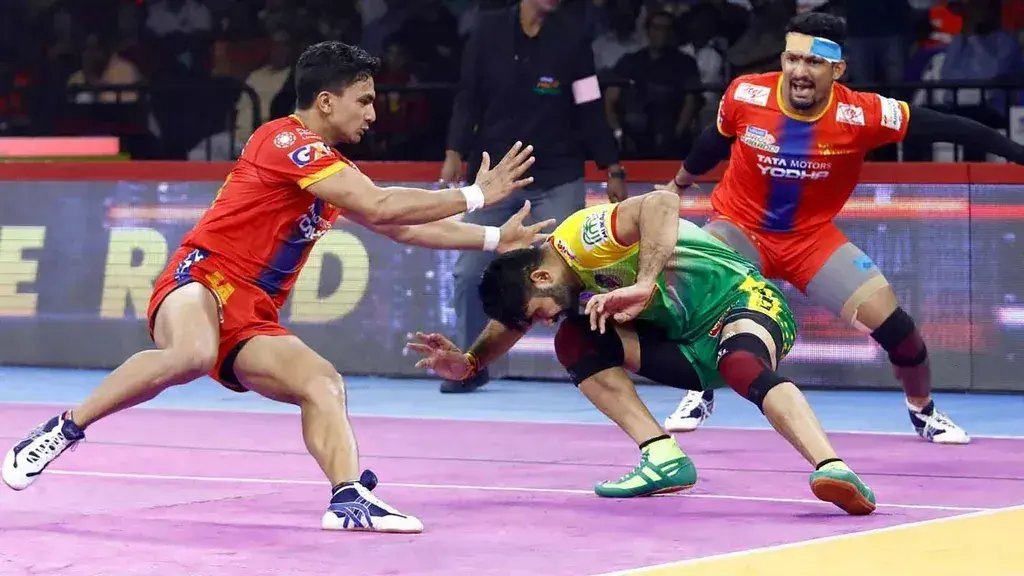
Kabaddi has changed a lot in the last decade. Earlier, the sport was mainly about star raiders who could win matches almost on their own. Fans loved watching fearless raiders score 15 to 20 points in a game with powerful escapes and quick attacks. However, that style of Kabaddi is slowly disappearing.
Today, the sport is controlled more by defensive units than individual raiders. The traditional raider decline in Kabaddi is clearly visible in leagues like the Pro Kabaddi League, where organized defensive systems are becoming stronger every season.
How Rules Changed the Game
One major reason behind the change is the introduction of the Do-or-Die raid rule. Earlier, raiders had more freedom to play slowly and study the defense. Empty raids were common because raiders wanted to wait for the perfect chance to attack.
Now, after two empty raids, the third raid becomes a Do-or-Die raid. If the raider fails to score, the team loses a player. This rule puts huge pressure on attackers. Defenders know the raider must take risks, so they prepare traps and force mistakes.
This is one of the biggest examples of how defenses changed Pro Kabaddi. Defenders no longer wait passively. Instead, they control the pace of the game and force raiders into difficult situations.
Modern Defensive Dominance in Kabaddi
The biggest difference between old and modern Kabaddi is teamwork in defense. Earlier, one defender could produce a magical ankle hold and stop a raider alone. Today, defensive systems work like a single unit.
This rise of modern Kabaddi defensive dominance has made life extremely difficult for traditional raiders. Defenders move together, close spaces quickly, and support each other during every tackle.
The modern “Chain and Escort System” is a perfect example. One defender starts the tackle while the others immediately surround the raider and block every escape route. Because of this teamwork, even the best raiders struggle to survive.
Defenders have also become more aggressive. Instead of staying deep inside their half, they now step forward and pressure raiders near the bonus line. This reduces the raider’s movement and forces rushed decisions.
The Role of Video Analysis
Technology has also played a huge role in the defensive revolution. Teams now study every move of top raiders through video analysis.
If a raider prefers a Dubki, Frog Jump, or Scorpion Kick, defenders already know about it before the match starts. Coaches prepare specific plans to stop those moves. Every habit, angle, and escape route is carefully studied.
Because of this preparation, surprise attacks are becoming rare. Raiders who once depended on instinct now face highly prepared defensive units every game.
The Rise of the System Raider
The era of one superstar carrying the entire team is fading away. Teams now prefer using multiple raiders with different roles.
Some raiders focus only on bonus points. Others are selected mainly for Do-or-Die raids. Modern Kabaddi is now more about strategy and teamwork than individual brilliance.
Raw power alone is no longer enough. Raiders must now depend on speed, balance, smart movement, and quick decision-making.
In modern Kabaddi, championships are usually won by strong defenses rather than star raiders. The sport has entered a new era where defensive systems rule the mat, and the traditional solo raider is slowly becoming a thing of the past.