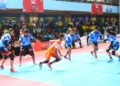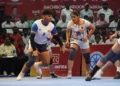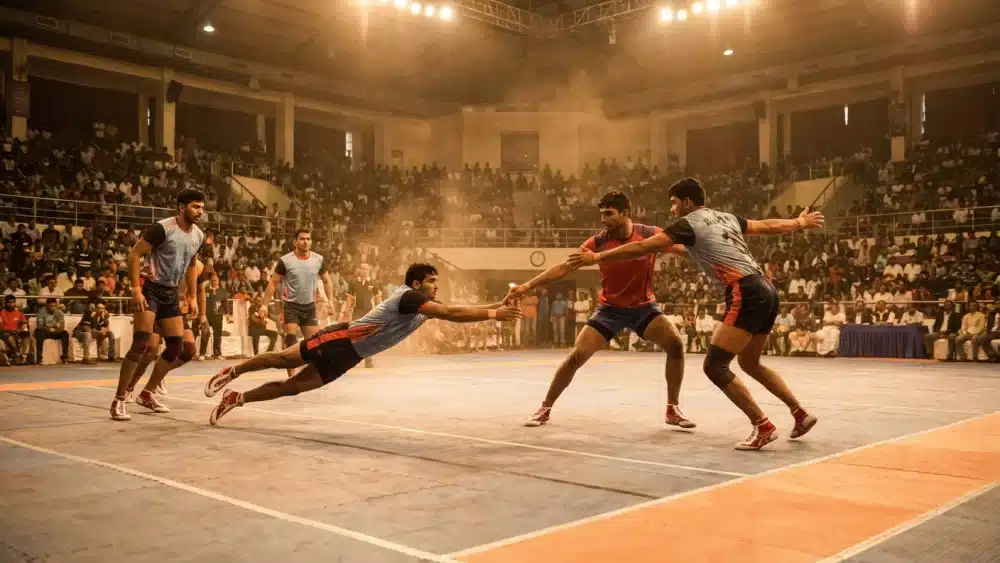
The inaugural Khelo India Tribal Games have been officially launched in Chhattisgarh, with Union Sports Minister Mansukh Mandaviya describing the event as a nationwide platform for tribal athletes. Close to 3,800 participants representing 30 states are set to compete over a 10-day period across nine disciplines, with kabaddi featured as one of the two demonstration sports at the Balbir Singh Juneja Indoor Stadium in Raipur.
A New Stage for Kabaddi
The Games will continue until early April, taking place across Raipur, Jagdalpur and Surguja. Around 2,300 athletes will compete in nine sports, including seven medal events: archery, athletics, football, hockey, swimming, weightlifting and wrestling. Kabaddi, along with mallakhamb, has been included in a demonstration capacity.
The presence of kabaddi in the programme carries significance, as the Tribal Games aim to identify talent from communities that often lack access to national sporting exposure. While kabaddi has a strong base in rural and semi-urban India, talent scouting has historically not reached deeply into tribal regions. Events like this are expected to bridge that gap by bringing competition closer to these areas.
The launch of the Tribal Games comes just a day after World Kabaddi Day, which this year carries the theme “Stronger Together, Kabaddi Forever.” Earlier in the month, the 5th Senior Federation Kabaddi Cup concluded in Satna, Madhya Pradesh, on March 22, where Indian Railways defeated Haryana 34-24 in the women’s final. Kabaddi has maintained a packed schedule throughout March.
More broadly, the sport’s grassroots calendar is expanding rapidly. With the Federation Cup, the Khelo India initiative and the upcoming Pro Kabaddi League Season 13 auction, early 2026 has seen heightened activity around kabaddi compared to recent years.
“More Than Medals”
Speaking at the opening ceremony at the Science College ground, Mansukh Mandaviya underlined the wider meaning of the event: “This is not just the launch of a sporting event. Sports are not only about medals. They represent a way of life, culture and harmony.”
He further noted that the Games should develop into a recurring national event in Chhattisgarh, highlighting a long-term vision rather than a one-time initiative.
Former India footballer Bhaichung Bhutia, who comes from a tribal background, described the initiative as “very important as it supports, nurtures, and provides a platform to the natural talent.” He also pointed out that many athletes from the North-East originate from tribal communities and have succeeded when given the right opportunities.
With approximately 3,700 participants, including coaches and officials, gathering in Chhattisgarh, the inaugural edition represents a significant push toward grassroots sport development. For kabaddi, its demonstration status offers organisers an opportunity to assess logistics and audience engagement, with the possibility of elevating it to a full competitive discipline in future editions. There is also optimism that standout performers from Raipur could progress to the Pro Kabaddi League in the coming years.
Talent Pathway and Athlete Development
Mandaviya confirmed that standout athletes from the Games will be identified by the Sports Authority of India and inducted into Khelo India training centres. Those selected will receive structured coaching and government-backed support as they prepare for national and international competition.