The Pro Kabaddi League (PKL) has evolved into a highly competitive tournament where tactical planning, player development and quick decision-making are essential to success.
While raiders and defenders attract attention with their performances on the mat, coaches play an equally important role behind the scenes. They develop strategies, analyse opponents, manage player fitness and guide teams through difficult situations.
Experienced coaches such as Randhir Singh Sehrawat, who built a long-standing association with Bengaluru Bulls, demonstrate the importance of leadership and consistency.
Here are eight qualities that define a successful Pro Kabaddi League coach.
1. Technical Knowledge and Tactical Planning
A great kabaddi coach must understand every aspect of the game, from attacking techniques to defensive formations. This includes raiding skills such as hand touches, toe touches, footwork and dubkis, alongside defensive techniques such as ankle holds, thigh holds, blocks and chain tackles.
However, technical knowledge alone is not enough.
Coaches must identify opponents’ weaknesses and develop strategies that allow their players to exploit them. They also need to ensure that tactical instructions become familiar through regular practice. The objective is to help players make effective decisions instinctively during competitive matches.
2. Video Analysis and Data-Driven Decisions
Modern PKL coaching increasingly combines traditional experience with video analysis and performance statistics. Coaches study match footage to identify patterns in opponents’ raiding and defensive approaches.
Important areas of analysis include:
- Raiders’ preferred attacking positions and escape routes.
- Successful tackle percentages.
- Defensive formations and vulnerable positions.
- Player movement and positioning.
- Opponents’ responses during high-pressure situations.
These insights help coaches convert statistical information into practical instructions and specific match plans that players can execute on the mat rather than relying entirely on intuition.
3. Coordination With Support Staff
A PKL head coach works closely with several specialists responsible for different aspects of team performance. Assistant coaches focus on technical development and positional training, while strength and conditioning trainers help players maintain their fitness.
Dietitians contribute to nutrition and recovery planning, and video analysts provide information about individual and team performances.
Successful coaches coordinate these departments to ensure that training methods, tactical preparation and recovery programmes support the same objectives. Effective communication between staff members is essential throughout a demanding season.
4. Quick Decisions During Matches
Kabaddi matches can change direction within seconds, making situational awareness one of the most valuable coaching skills. Coaches must react to changing circumstances, particularly during Do-or-Die raids and Super Tackle opportunities.
A Super Tackle situation occurs when the defending team has three or fewer players on the mat.
Depending on the match situation, a coach may instruct defenders to attempt an aggressive tackle, ask a raider to target a particular opponent or encourage a more cautious approach. Time management also becomes important when teams are protecting narrow leads or attempting late comebacks.
The ability to make clear decisions under pressure can influence the outcome of closely contested matches.
5. Squad Rotation and Bench Strength
Managing a squad effectively is another important responsibility. Coaches must identify their strongest starting seven while ensuring that substitutes remain prepared to contribute.
Throughout a long season, player rotation can help manage fatigue, reduce excessive workloads and maintain tactical flexibility.
A strong bench also allows coaches to introduce different combinations depending on opponents and match conditions.
Developing younger players is equally important because it strengthens the squad beyond the immediate starting lineup.
6. Mental Conditioning and Composure
Kabaddi demands physical strength, but psychological resilience is just as important. Players regularly face high-pressure situations, including crucial raids, failed tackles and narrow defeats.
A successful coach helps athletes remain composed and recover quickly from mistakes.
Rather than allowing frustration to affect subsequent plays, coaches encourage players to focus on the next opportunity.
They must also maintain balance within the squad, preventing overconfidence after victories and supporting players following disappointing performances.
Strong mental preparation can make a difference during decisive moments.
7. Empathy and Team-First Leadership
Building a successful team requires more than tactical instructions. Great coaches create an environment where players feel respected, supported and responsible for collective results.
When a raider struggles to score or a defender experiences a decline in form, individual conversations can help identify the problem.
Constructive feedback allows players to understand their weaknesses without losing confidence.
This approach also strengthens trust between the coaching staff and the squad.
A team-first culture encourages players to prioritise collective success over individual recognition.
8. Clear Communication During Matches
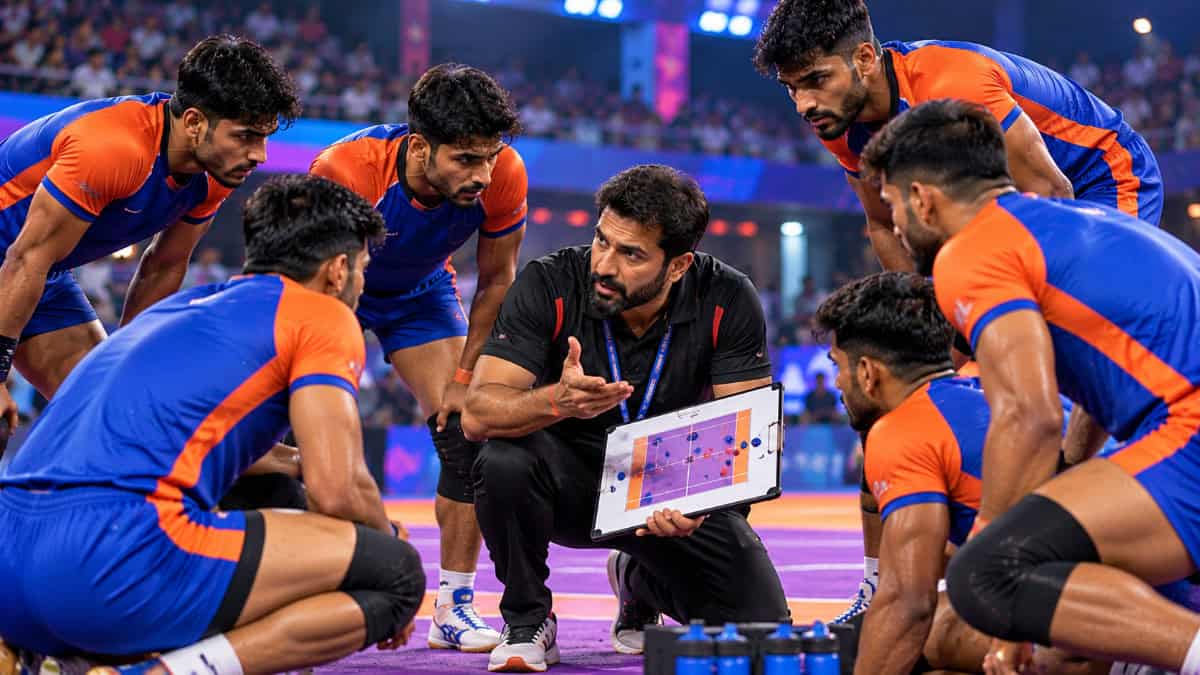
Communication is especially important in the fast-paced environment of professional kabaddi. Coaches have limited opportunities to deliver tactical instructions, particularly during official time-outs and the half-time interval. Lengthy explanations are often ineffective when players are physically exhausted and need immediate guidance.
Instead, successful coaches communicate through short, precise instructions. These may involve identifying a vulnerable defender, adjusting a defensive formation or changing the team’s approach to the next raid.
Clear communication ensures that players understand what is expected of them before returning to action.
Randhir Singh Sehrawat’s Coaching Legacy
Randhir Singh Sehrawat provides an example of long-term coaching stability in the Pro Kabaddi League. He was associated with Bengaluru Bulls from the inaugural season through Season 11 and helped establish the franchise’s competitive identity.
His tenure included Bengaluru Bulls’ championship victory in Season 6, when Rohit Kumar captained the team. Sehrawat also played an important role in developing emerging talent, including Pawan Sehrawat.
His career illustrates how sustained player development and tactical adaptation can contribute to long-term success.
Joginder Narwal and the Importance of Team Selection
Former kabaddi player and coach Joginder Narwal offers another example of the responsibilities involved in building a competitive squad. His work with Dabang Delhi KC highlights the importance of selecting players who can contribute in both attack and defence.
Discussing the team’s performances, Narwal said:
“All these players who have done well- offense and defense all these players have done well in the crunch phase of the game”
His comments underline the importance of identifying players capable of delivering under pressure.
For coaches, successful team selection involves balancing individual abilities with combinations that function effectively during competitive matches.
How Has PKL Coaching Changed Over the Years?
The responsibilities of a Pro Kabaddi League coach have expanded considerably since the tournament’s early seasons.
Traditional coaching focused heavily on physical conditioning, technical drills and match experience.
Modern coaches must also understand performance analytics, player recovery, workload management and opposition-specific tactics. They are responsible for preparing teams before matches, making adjustments during games and evaluating performances afterwards.
Coaches also face public accountability through media interactions and press conferences. As the league continues to evolve, adaptability remains one of the most important qualities for long-term success.
Frequently Asked Questions
What are the most important skills for a Pro Kabaddi coach?
Technical knowledge, tactical planning, communication, leadership, player development and quick decision-making are essential qualities.
How do PKL coaches use video analysis?
Coaches review match footage to study raiding patterns, defensive weaknesses, player positioning and opponents’ preferred tactics.
Why is squad rotation important in kabaddi?
Rotation helps manage player fatigue, maintain fitness and ensure substitutes are ready when needed.
What is the role of a coach during Do-or-Die raids?
Coaches prepare players for high-pressure situations and help them understand when to attack, defend cautiously or target specific opponents.
How do coaches improve players’ confidence?
They provide constructive feedback, conduct individual discussions and help players recover mentally from mistakes or poor performances.
Why is communication important during PKL matches?
Coaches have limited time to deliver instructions, so clear and concise communication helps players make immediate tactical adjustments.
Conclusion
A successful Pro Kabaddi League coach must combine technical expertise with tactical intelligence, leadership and effective player management.
From analysing opponents and developing match strategies to maintaining squad morale and making crucial substitutions, the role extends far beyond training sessions.
As professional kabaddi becomes increasingly competitive, coaches who embrace innovation while building strong relationships with their players will remain essential to their teams’ success.