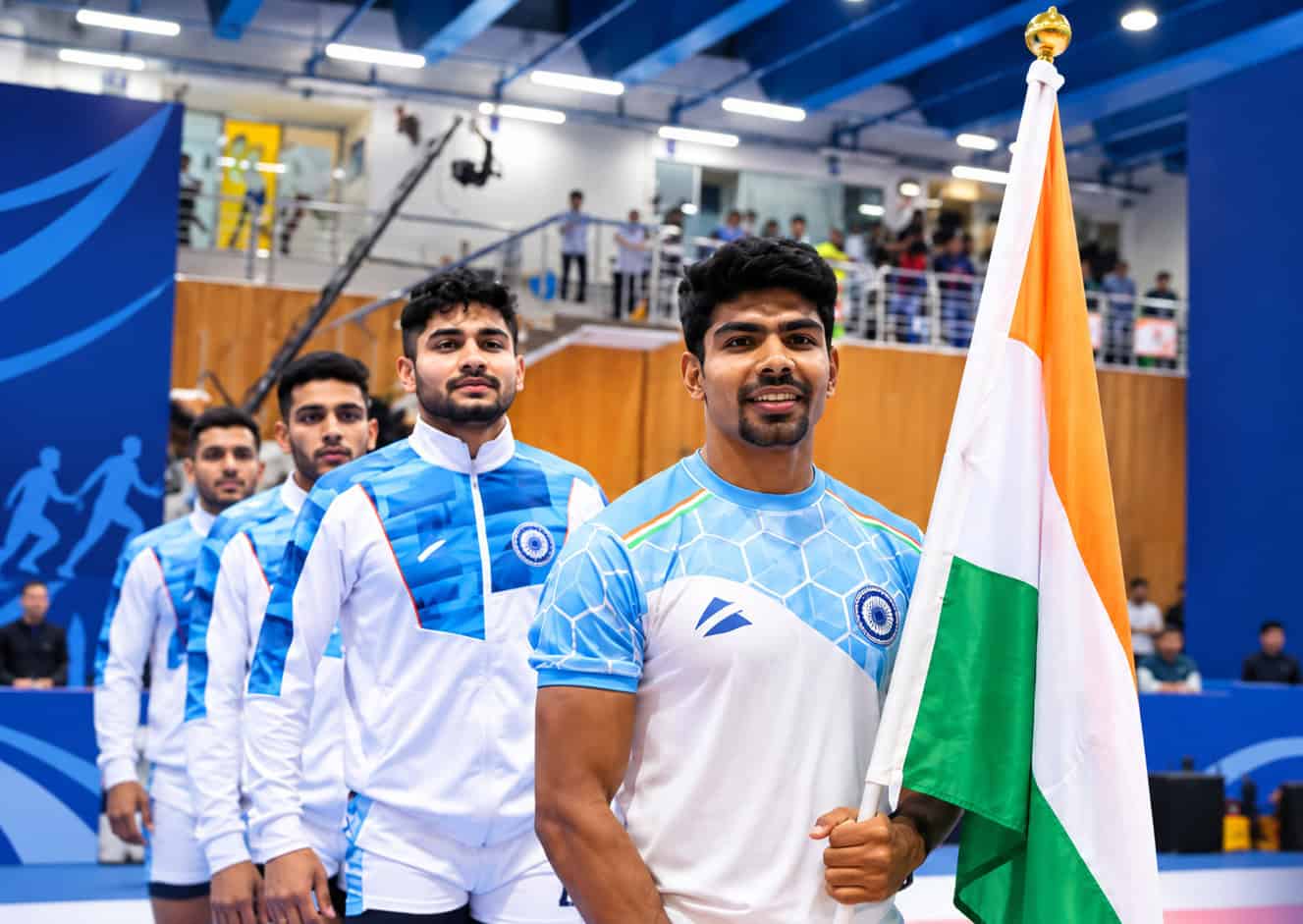
Indian men’s kabaddi vice-captain Pawan Sehrawat has highlighted the major difference between playing in the Pro Kabaddi League and representing India at the Asian Games. With the 2026 Asian Games approaching, the star raider believes the biggest difference is the margin for error and the format of the two competitions.
Speaking to PTI, Pawan Sehrawat explained that players have more opportunities to recover from defeats during a long PKL campaign. However, the Asian Games provide very little room for mistakes because teams have only a handful of matches to reach the knockout stages and compete for the gold medal.
Pawan Sehrawat Explains PKL vs Asian Games
Pawan Sehrawat’s PKL vs Asian Games comparison mainly focuses on the number of matches and the pressure attached to every result. A PKL team can play around 20 to 22 matches during the league stage before entering the playoffs, giving players time to recover after poor results.
The Asian Games are completely different because the competition takes place over a much shorter period. India may have only five to seven matches during the tournament, meaning one defeat can have a major impact on the team’s chances of progressing.
Sehrawat described the Asian Games as a “do-or-die” environment where every match demands maximum concentration. According to the experienced raider, there may not be enough time to recover from a poor start in an international tournament.
Difference Between PKL and Asian Games Kabaddi
The biggest difference between PKL and Asian Games kabaddi is therefore the tournament structure. PKL is a long franchise competition where teams can manage their squads, rotate players and build momentum over several weeks.
International tournaments require a different approach. India’s players come together as a national team after competing against each other during the domestic season, and they must quickly develop chemistry before facing some of the best kabaddi players from other countries.
This creates a different kind of pressure for the Indian team. Players who are rivals in the PKL become teammates when they represent India, while some of their international opponents may also be familiar faces from franchise competition.
Pro Kabaddi vs International Kabaddi
The Pro Kabaddi vs international kabaddi comparison also involves differences in the playing environment and tactical approach. In the PKL, players regularly work with teammates from different countries, including experienced Iranian players, while international competition brings together players representing their respective nations.
Sehrawat believes India’s past success can actually help the team rather than create additional pressure. India are among the traditional favourites in Asian Games kabaddi and have previously dominated the competition.
The star raider said India’s historical success should provide confidence to the squad as it prepares to defend its title in Japan. For him, the team’s past achievements are a positive rather than a burden.
PKL vs Asian Games Kabaddi Rules and Pressure
The PKL vs Asian Games kabaddi rules comparison is another important area for players preparing for international competition. While there are differences in rule interpretation and playing conditions, Sehrawat’s main focus is on adapting mentally to the shorter international tournament.
India reclaimed the Asian Games gold in Hangzhou under Sehrawat’s leadership group and will now look to defend the title in 2026. With fewer matches and almost no margin for error, the Indian players will need to maintain their concentration from the opening whistle.
For Sehrawat, the difference is simple: PKL gives teams time to recover, while the Asian Games demand immediate results. That distinction could prove crucial as India begins its campaign to retain the Asian Games kabaddi crown.