Kabaddi is often seen as a game of strength, speed, and skill. However, at the highest level, success depends on much more than physical ability. Elite raiders must make quick decisions, stay calm under pressure, and manage every second of a raid wisely.
The combination of clock management in kabaddi, mental strength, and smart movement makes top raiders stand out from the rest.
Clock Management in Kabaddi
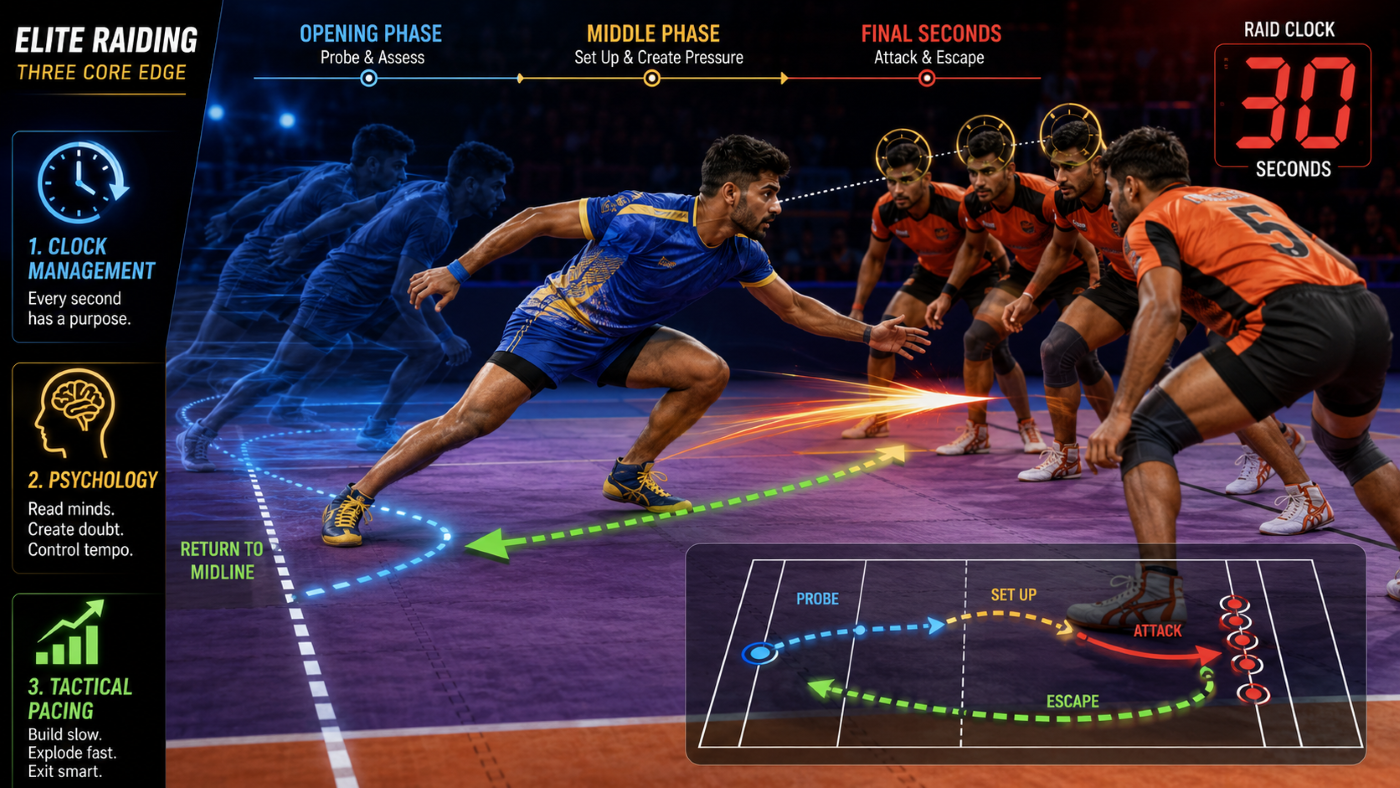
Every raid in modern kabaddi is limited to 30 seconds. For elite raiders, these 30 seconds are not just a time limit. They are a valuable resource that can be used strategically.
The Opening Phase
During the first few seconds of a raid, experienced raiders rarely rush into action. Instead, they carefully study the defensive formation and identify weak areas.
This slow approach helps them understand where opportunities may appear later in the raid. It also creates a false sense of comfort among defenders.
The Middle Phase
The middle part of the raid is where the raider begins to influence the defense.
If the raider’s team is leading, they may use more time and force the opposition to wait. This helps reduce the amount of possession available to the other team.
If the team is behind, the raider often attacks more quickly. The goal is to score points early and create more chances later in the match.
The Final Seconds
The last few seconds of a raid are often the most important. Defenders know time is running out and may become anxious.
Elite raiders use this pressure to their advantage. A fake movement or sudden change in direction can force defenders into mistakes and create scoring opportunities.
Psychology of Elite Raiders
The psychology of elite raiders plays a major role in their success. A raid is not only a physical battle but also a mental contest between one attacker and seven defenders.
Top raiders remain focused even in difficult situations. Crowd noise, pressure from the scoreboard, or previous mistakes do not distract them.
Instead, they concentrate on the task in front of them. They pay attention to defender positioning, movement patterns, and possible weaknesses.
Creating Pressure on Defenders
Elite raiders often use small psychological tricks.
Maintaining eye contact with a defender or making a sudden fake movement can create uncertainty. These actions force defenders to hesitate or lose coordination with teammates.
Even a small moment of confusion can open a path for the raider to score points.
Tactical Pacing in Kabaddi
One of the most important skills in the game is tactical pacing in kabaddi.
Elite raiders know when to slow down and when to accelerate. They constantly switch between controlled movement and explosive attacks.
When moving slowly, they observe defenders and recover energy. This phase helps them prepare for the right moment.
When an opportunity appears, they quickly increase their speed to attempt a touch or escape a tackle.
Planning the Exit
Great raiders think about their return path before entering the opposition half. Once they score, they need to return safely while keeping their own team’s defensive structure intact.
This ability to plan ahead separates elite players from average ones.
Conclusion
Mastering clock management in kabaddi, understanding the psychology of elite raiders, and applying effective tactical pacing in kabaddi are essential qualities for success. These skills allow top raiders to stay one step ahead of defenders and consistently perform at the highest level.
In modern kabaddi, intelligence and strategy are just as important as strength and speed.