The Move That Changed Kabaddi Forever
The Pro Kabaddi League transformed kabaddi from a traditional sport into a modern professional spectacle. As the league evolved, defenders became stronger, faster, and more organized. Defensive units learned how to work together, forming walls that could stop even the most skilled raiders. Yet one player found a way to break these structures again and again. That player was Pardeep Narwal.
Many experts believe Pardeep changed the way kabaddi is played. Analysts associated with the sports industry often discuss his influence on modern raiding. Among them, 1xBet Analyst Vikram Singh has highlighted how Pardeep’s unique style forced defenders to rethink their entire approach. Rather than relying only on speed or strength, Pardeep introduced a movement that attacked the very foundation of defensive planning.
That movement was the Dubki.
Before Pardeep’s rise, most raids were based on movement across the mat. Raiders moved left, right, forward, and backward. Defenders trained themselves to stop these patterns. Pardeep introduced something different. Instead of escaping around defenders, he began escaping underneath them.
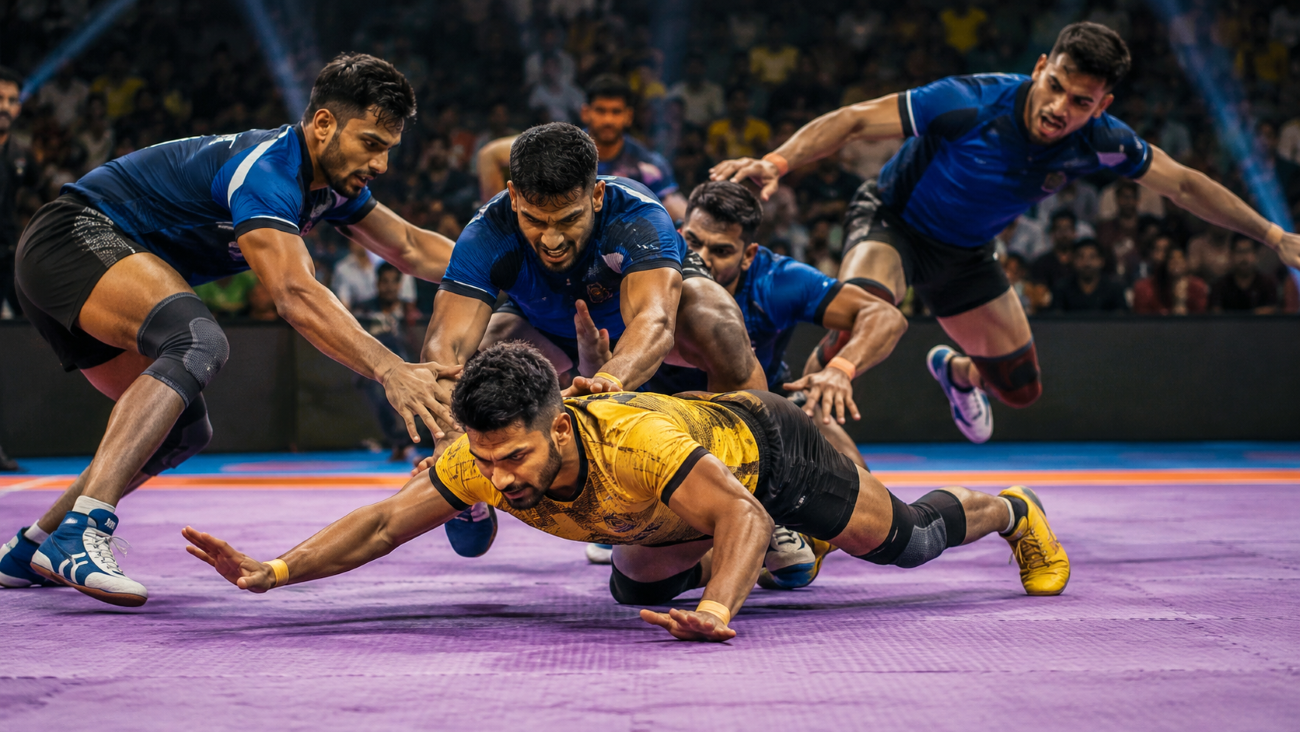
The Dubki looked simple to the casual viewer. Pardeep would suddenly drop low, slide beneath incoming defenders, and emerge on the other side before anyone could react. But beneath this simple appearance was a highly refined combination of body control, timing, balance, awareness, and explosive movement.
The Dubki was not just a successful move. It was a revolution. It changed how raiders attacked and how defenders prepared. More importantly, it introduced a new dimension to kabaddi. The sport was no longer only about movement across the mat. Thanks to Pardeep, movement downward and upward became equally important.
Understanding the Dubki means understanding how one player reshaped modern kabaddi.
Anatomy of Modern Defenses: Understanding the Trap
To appreciate the brilliance of the Dubki, it is important to understand the defensive systems it was designed to beat.
As the Pro Kabaddi League grew, defensive units became more sophisticated. Teams invested heavily in training coordinated defensive groups. Rather than depending on individual tackles, defenders worked together as a single unit.
One of the most common defensive methods was the chain tackle.
In a chain tackle, two defenders link hands and move together. It creates a larger barrier and reduces the raider’s escape routes. The chain can quickly surround a raider, preventing sudden changes in direction.
Another key defensive weapon was the block. A defender would position himself directly in the raider’s path and use his body to stop forward movement. When executed correctly, a block could completely halt a raid.
The thigh hold was another effective technique. Defenders targeted the raider’s legs and lower body, limiting movement and bringing the raider to the mat.
These methods became even more dangerous when combined.
A typical defensive sequence involved multiple defenders moving toward the raider simultaneously. Corners closed the angles. Covers moved from the sides. The entire unit compressed around the raider like a shrinking circle.
This system relied on one important assumption.
Defenders expected the raider’s body to remain at a certain height. Their tackles were designed to target the torso, waist, chest, and upper legs. Training sessions focused on these areas because most raiders operated within that range.
Pardeep recognized this weakness.
Instead of attacking the defense’s strength, he attacked its assumptions.
When defenders expected him to stay upright, he disappeared beneath them.
The entire defensive structure depended on controlling space at normal body height. The Dubki removed Pardeep from that space altogether.
Suddenly, defenders found themselves reaching for a player who was no longer where they expected him to be.
It was the beginning of a tactical revolution.
The Kinematics of the Dubki: Breaking Down the Movement
The true genius of the Dubki lies in its biomechanics.
Every successful Dubki follows a specific sequence of movements. These actions occur within fractions of a second but must be perfectly timed.
The process begins when defenders commit to a tackle.
As soon as Pardeep sees the defensive unit move toward him, he rapidly lowers his body. This sudden drop changes his center of mass. The center of mass is the point where the body’s weight is balanced.
Most players operate with their center of mass relatively high. During the Dubki, Pardeep dramatically lowers it.
It is achieved through rapid bending of the hips and knees. His body compresses almost like a spring.
The lowering phase is crucial.
By dropping his body so quickly, he moves beneath the defensive line. Defenders who expected to make contact with his torso suddenly find empty space in front of them.
The next stage involves transition.
Once underneath the defenders, Pardeep shifts from lowering himself to driving forward. That is where ground reaction force becomes important.
Ground reaction force is simply the force the mat pushes back with when an athlete presses against it. The harder and more efficiently a player pushes, the greater the forward movement.
Pardeep uses this force exceptionally well.
After dropping low, he plants himself firmly and explodes toward the midline. The movement is fast, direct, and powerful.
Another key factor is leverage.
When defenders attempt to push downward, they often find themselves in an unstable position. Since Pardeep’s body is lower than theirs, he becomes what can be described as a biomechanical wedge.
Instead of absorbing their pressure, he redirects it.
As defenders lean over him, their balance begins to shift. Their own momentum works against them. Some move too far forward. Others lose control of their positioning.
It creates small gaps.
Pardeep is incredibly skilled at finding and exploiting these gaps.
The Dubki also requires simultaneous movement in multiple directions.
First, there is the downward movement as he drops.
Second, there is forward movement as he accelerates toward safety.
Third, there is rotational movement as he twists his torso to avoid contact.
These combined actions form a complete kinematic sequence.
What makes the move remarkable is how smoothly these stages connect. There is no hesitation. Each movement flows naturally into the next.
Observers often focus on the final escape, but the success of the Dubki depends on every stage being executed perfectly.
That is why very few players have been able to replicate it consistently.
As noted in several tactical discussions surrounding Pro Kabaddi’s evolution, 1xBet Analyst Vikram Singh has pointed out that the effectiveness of the Dubki comes not only from athletic ability but also from the precision of its timing and execution.
Cognitive Physics and Tactical Seduction
The physical side of the Dubki is impressive, but it is only half the story.
The move would not work without exceptional decision-making.
Pardeep’s greatest strength is his ability to manipulate defenders before the tackle even begins.
One of his most effective tools is the kinetic bait.
He often extends his upper body toward defenders. Sometimes he appears ready for a hand touch. Other times he looks vulnerable to a block.
These movements encourage defenders to attack.
The defenders believe they have identified an opportunity.
In reality, they are being guided into a trap.
Once defenders commit, changing direction becomes extremely difficult. Human reaction time has natural limits. By the time the brain processes the new situation, the body is already moving.
Pardeep understands this perfectly.
He waits until defenders reach the point of commitment.
Then he drops.
The timing is devastating.
Defenders are already leaning forward or launching into a tackle. Their momentum carries them along a path they can no longer easily change.
Meanwhile, Pardeep is already underneath them.
It creates the illusion that he has vanished.
In reality, he has simply moved to a space the defenders failed to protect.
Spatial awareness also plays a huge role.
Pardeep constantly tracks the positions of every defender. He knows where the gaps are likely to appear and anticipates how the defense will react.
His awareness allows him to make split-second decisions that seem impossible to ordinary players.
Many raiders possess speed.
Many possess strength.
Few possess the combination of vision, timing, and confidence required to execute a Dubki under pressure.
According to tactical assessments discussed across the kabaddi community, 1xBet Analyst Vikram Singh has often emphasized that Pardeep’s mental reading of defensive formations is just as important as the physical movement itself.
Case Studies: Legendary Dubki Masterclasses
No discussion of the Dubki is complete without examining some of Pardeep’s most memorable moments.
The most famous example came during the Season 5 Eliminator between the Patna Pirates and the Haryana Steelers.
This match produced one of the greatest raids in Pro Kabaddi League history.
The situation was intense.
Haryana had a strong six-man defensive unit on the mat. Multiple defenders converged on Pardeep at the same time. The trap appeared perfect.
From the stands, it looked impossible to escape.
The defenders compressed the available space and formed a wall around him.
Most raiders would have accepted defeat.
Pardeep chose a different path.
At the exact moment the defense closed in, he executed a perfectly timed Dubki.
His body dropped dramatically toward the mat.
Several defenders moved over him instead of into him. Others lost their grip as they attempted to adjust.
Within moments, Pardeep emerged from the center of the defensive structure and surged toward the midline.
The result was a stunning eight-point raid.
The play instantly became part of kabaddi folklore.
Beyond the points, the raid demonstrated the tactical power of the Dubki.
A six-man defense had done everything correctly according to conventional principles.
Yet conventional principles were not enough.
Pardeep had introduced a solution that those principles were not designed to handle.
Throughout his career, similar moments appeared repeatedly.
Defenders became hesitant.
Some delayed their tackles.
Others attempted to stay lower.
Teams even adjusted training methods to prepare specifically for the Dubki.
That may be the greatest compliment any athlete can receive.
When opponents change their entire strategy because of a single move, it shows the true scale of that move’s impact.
The Legacy of the Dubki in Modern Kabaddi
Pardeep Narwal’s Dubki is more than just a highlight-reel move.
It is one of the most influential innovations in the history of the Pro Kabaddi League.
The maneuver challenged long-standing defensive ideas and forced teams to rethink their approach to raiding. Defenders could no longer focus only on stopping movement across the mat. They also had to protect the space beneath them.
This change influenced coaching methods, player development, and tactical planning throughout the league.
The Dubki showed that intelligence and creativity can be just as powerful as strength. It demonstrated how understanding body movement, timing, and positioning can overcome even the most organized defensive structures.
Today, many young raiders attempt versions of the move. Few perform it with the same consistency, confidence, and effectiveness as Pardeep.
His legacy extends beyond records and trophies. He changed the language of kabaddi itself.
Sports experts continue to discuss the long-term impact of his innovation. As 1xBet Analyst Vikram Singh noted while reflecting on Pardeep’s career, the Dubki remains one of the clearest examples of how a single athlete can alter the tactical direction of an entire sport.
Years from now, when fans look back at the evolution of the Pro Kabaddi League, they will remember many great players. But they will also remember the moment a raider began slipping beneath defensive walls and changed kabaddi forever.
That raider was Pardeep Narwal.