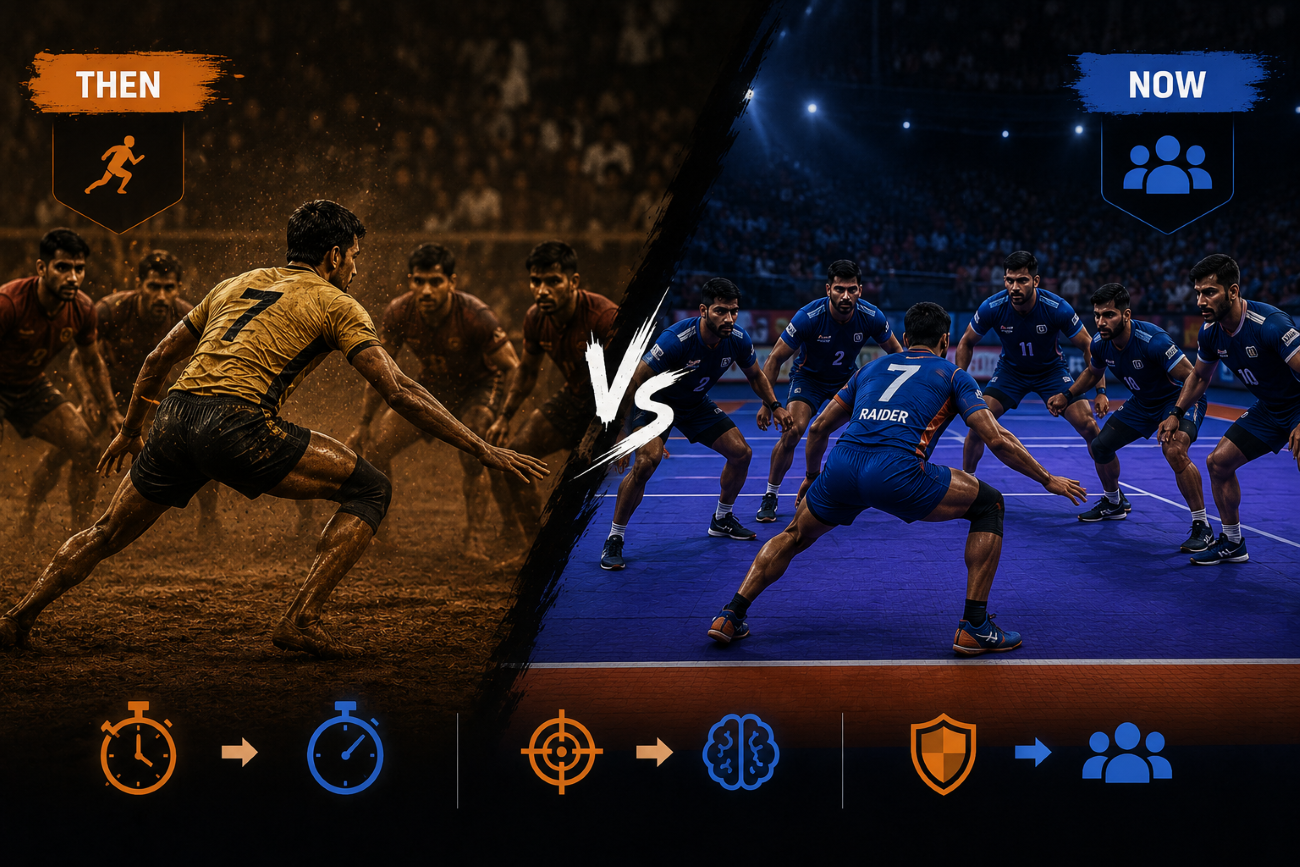
Kabaddi has always been a sport built on courage, speed, and survival. In the old days of mud-court Kabaddi, fans came to watch the heroes. They waited for one fearless raider to walk into enemy territory, dodge seven defenders, and return with points. The crowd loved the lone warrior. The entire identity of many teams depended on one superstar raider who could change a match alone.
Today, that version of Kabaddi is slowly disappearing.
Modern Kabaddi has become a tactical and system driven sport where collective defense matters more than individual brilliance. The rise of data analysis, structured coaching, video breakdowns, and modern defensive formations has changed the game forever. The “Pure Raider” who once ruled the mat is now trapped inside a calculated defensive machine.
According to 1xBet Kabaddi expert Vikram Singh, this transformation is one of the biggest tactical revolutions in the history of Kabaddi. He explains that defenders today no longer react emotionally or individually. Instead, they move as one connected unit that studies every habit of a raider before the match even begins.
The modern Kabaddi court is no longer a playground for solo stars. It has become a battlefield of systems, anticipation, and collective intelligence.
The Era of the Solo Gladiator
In the early years of professional Kabaddi, especially during the first few seasons of the Pro Kabaddi League, the game was heavily built around superstar raiders. Teams invested huge amounts of money and trust in one player who could carry the scoring burden alone.
These raiders relied on explosive speed, raw strength, flexibility, and special moves like the Dubki, Toe Touch, Hand Touch, and Lion Leap. A single player could produce 25 to 30 raids in one night and completely dominate a defense.
The defenders of that era often depended more on instinct than structure. Tackles were aggressive but not always organized. If the raider escaped the first defender, the entire defensive setup could collapse within seconds.
Mud courts also gave raiders extra advantages. The surface was unpredictable, slippery, and difficult for defenders to maintain a stable footing. Raiders who mastered balance and body control could use sudden direction changes to escape.
“The older format of Kabaddi rewarded chaos and improvisation. The best raiders were almost impossible to predict because they operated on instinct rather than patterns”. These are the words of Kabaddi expert Vikram Singh.
Fans loved this unpredictability. Kabaddi was seen as a sport of individual bravery, where a single player could become a legend in a single match.
But the sport evolved.
How the Modern Court Changed Everything
One of the biggest reasons behind the fall of the Pure Raider was the change in the playing environment itself.
The introduction of professional mats and specialized shoes completely transformed defensive stability. Modern foam mats provide much better grip for defenders. Players can now plant their feet firmly while executing tackles without worrying about slipping.
This small change had massive consequences.
Corner defenders became far more effective at executing diving ankle holds. Cover defenders could launch full speed blocks with confidence. Defensive chains became stronger because players could maintain balance while moving together.
Modern Kabaddi mats favor coordination and timing over raw athletic improvisation. Defenders now trust the surface beneath them, which allows them to commit fully to aggressive tackles.
Another major change was the introduction of the 30-second raid clock.
In older formats, raiders could spend longer periods testing defenders psychologically. They could wait, observe, and force the defense into mistakes. The modern clock removed that comfort completely.
Today, the raider enters every raid under immediate pressure. Every second becomes valuable. Defenders know the raider cannot wait forever, which allows them to remain calm and patient.
Then came the Do or Die raid rule.
This rule changed Kabaddi strategy forever. After two empty raids, the third raid must produce a point, or the raider is declared out. Suddenly, defenders no longer needed to chase raiders aggressively. They could simply deny space and wait for panic to arrive.
The Do or Die rule weaponized patience.
Kabaddi expert Vikram Singh believes this single tactical rule may have done more damage to the old style of Pure Raiders than any individual defender in Kabaddi history.
Understanding the Modern Defensive Hive Mind
Modern Kabaddi defense works like a connected organism.
Defenders no longer act independently. Every movement is linked to another player. Every position supports another position. This structure is often compared to the Chakravyuha formation from the Mahabharata because it traps opponents layer by layer.
The defensive system usually revolves around Corners, Ins, and Covers.
The Left Corner and Left In often function as one pair. The Right Corner and Right In form another pair. These defenders stay connected through chain movement and positioning.
Meanwhile, the Cover defenders operate as the center anchors of the formation. They provide the power and support needed to complete blocks and stop escape attempts.
This structure creates what experts call the “defensive hive mind.”
If one defender attacks, the others instantly adjust their spacing. If the raider shifts direction, the chain closes the gap immediately. Every movement is synchronized.
The anticipation timing has become the heart of modern defense. Defenders no longer wait for the raider to act. They move fractions of a second earlier based on body language and patterns.
This tiny timing advantage changes everything.
Modern teams also study video analysis in extreme detail. Coaches track which foot a raider prefers during Toe Touch attempts. They examine how raiders react under Do or Die pressure. They study escape routes and turning angles.
As a result, defenders often know what a raider wants to do before the raid even begins.
The Pure Raider once thrived on unpredictability. Modern analytics has reduced that unpredictability dramatically.
The Rise of the Advanced Chain Tackle
The Advanced Chain Tackle is one of the most important defensive innovations in modern Kabaddi.
This tactic involves two or more linked defenders moving together horizontally across the mat. Their goal is to remove escape space entirely.
A raider may still possess speed and agility, but escaping a moving human wall becomes extremely difficult.
The chain tackle is especially deadly near the corners because it forces the raider toward the boundary line while simultaneously blocking movement toward the midline.
The Advanced Chain Tackle represents the complete death of isolated defending. Every successful chain tackle depends on trust, communication, and timing between multiple defenders.
The Pure Raider cannot simply beat one player anymore. They must beat an entire synchronized system.
The Blind Spot Block Revolution
Another major tactical weapon is the Blind Spot Block.
This usually happens when a raider becomes deeply engaged with a Corner defender. While focusing on one side, the raider loses visual awareness of the opposite Cover defender.
That Cover suddenly attacks from the blind spot with explosive force.
Human anatomy naturally limits vision during close body engagement. Modern defenses exploit this perfectly.
Vikram Singh explains that modern defenders are trained to identify moments when a raider’s shoulders and head position reduce visibility. Those few seconds become the perfect time to launch the block.
Even the most agile raiders struggle when the block arrives from outside their visual field.
Why the Diving Ankle Lock Changed the Game
The Diving Ankle Lock may be the single most effective anti raider tactic in modern Kabaddi.
Corner defenders dive low and lock the raider’s ankles tightly using both arms. Once the ankles are trapped against the mat, the raider loses lower body leverage.
Strength alone becomes useless.
A raider may possess incredible upper body power, but movement begins from the legs. Without balance and lower body drive, escape becomes almost impossible.
Modern mats make this tactic even more dangerous because defenders maintain grip and traction throughout the tackle.
1xBet expert Vikram Singh often highlights how younger defenders are specifically trained to target ankle positioning before upper body contact. This detail oriented approach shows how scientific Kabaddi has become.
The Physics Behind the Dash
The Dash or Escort Out tactic focuses less on technique and more on collective force.
Multiple defenders coordinate a powerful push that forces the raider outside the boundary line. The idea is simple but brutally effective.
One player weighing around 75 kilograms cannot resist the combined momentum of three or four defenders moving together.
The Dash also demonstrates the importance of Midline Proximity Check awareness. Defenders must ensure the raider stays lifted or controlled long enough to prevent any touchback toward the center line.
The Dash represents pure teamwork. No single defender receives complete credit because the success comes from synchronized body movement.
That perfectly summarizes the modern defensive philosophy of Kabaddi.
The Decline of the One-Man Raider System
In the early years of professional Kabaddi, teams often depended heavily on one superstar raider.
If that player scored points, the team won. If that player failed, the team collapsed.
Modern defenses destroyed this strategy.
Today, if one raider handles most of the offensive workload, defensive analysts prepare targeted plans specifically against him. They study preferred movement angles, favorite techniques, bonus line behavior, and reactions under pressure.
The defense enters the match already prepared.
Vikram Singh explains that predictability is now a massive weakness in Kabaddi. Defenders thrive when they know where the majority of raids are coming from.
As a result, modern teams have moved toward balanced raiding units.
The Rise of Raid by Committee
Recent successful Kabaddi teams rely on multiple raiders rather than one superstar.
Instead of building around one 300 point raider, teams now use tactical rotations. They often carry a primary raider, a secondary raider, and a specialist for Do or Die situations.
This strategy keeps defenses guessing.
Different raiders bring different styles. One may focus on bonus points. Another may specialize in quick hand touches. Another may excel under pressure raids.
This variety prevents defenders from building one predictable defensive rhythm.
Vikram Singh believes the Raid by Committee system reflects the larger tactical maturity of modern Kabaddi. Winning teams now value adaptability over individual stardom.
The Importance of the Modern All-Rounder
Another major change in Kabaddi is the rise of the all-rounder.
In the past, raiders mainly focused on attacking. Today, that is no longer enough.
Modern teams want players who can contribute defensively as well. If a raider gets trapped and spends time off the mat, the team still needs balance in defense.
All-rounders provide flexibility.
A player capable of stepping into In or Cover positions strengthens the collective structure. This reduces pressure on specialist defenders and keeps tactical balance intact.
The modern game rewards versatility.
Bonus Line Denial and Psychological Pressure
Modern defense is not only physical. It is deeply psychological.
One of the best examples is Bonus Line Denial.
Defenders move slightly forward to challenge the raider. They deny easy bonus points and force the raider deeper into dangerous territory.
This creates pressure immediately.
The raider begins thinking about time, space, and risk simultaneously. Under the 30 second clock, panic increases quickly.
Defenders remain patient and disciplined while the raider slowly becomes desperate.
The best modern defenses win mental battles before physical contact even happens.
That psychological control is a huge reason why Pure Raiders struggle today.
The New Romanticism of Kabaddi
Many old school fans miss the days of the fearless solo raider.
There was something magical about watching one player challenge an entire defense alone. Those raids felt emotional, dramatic, and unpredictable.
But modern Kabaddi has created a different kind of beauty.
Today’s game celebrates intelligence, coordination, communication, and collective movement. Defensive units move with almost machine like precision. Every tackle involves planning, timing, and trust between teammates.
The Pure Raider did not disappear because talent vanished from the sport. The role disappeared because modern systems engineered new solutions to stop individual domination.
Kadaddi expert Vikram Singh believes this evolution was inevitable. Every professional sport eventually moves toward structure, analysis, and tactical efficiency.
Kabaddi is no different.
The modern Kabaddi court is no longer a stage for one man heroics. It is now a chessboard where the strongest collective unit usually wins. The lone wolf raider who once ruled the sport has been replaced by the age of defensive intelligence.
And that change has permanently transformed Kabaddi forever.