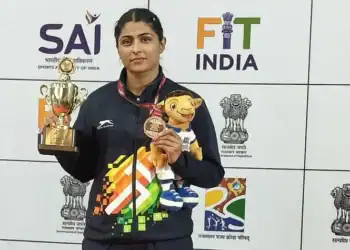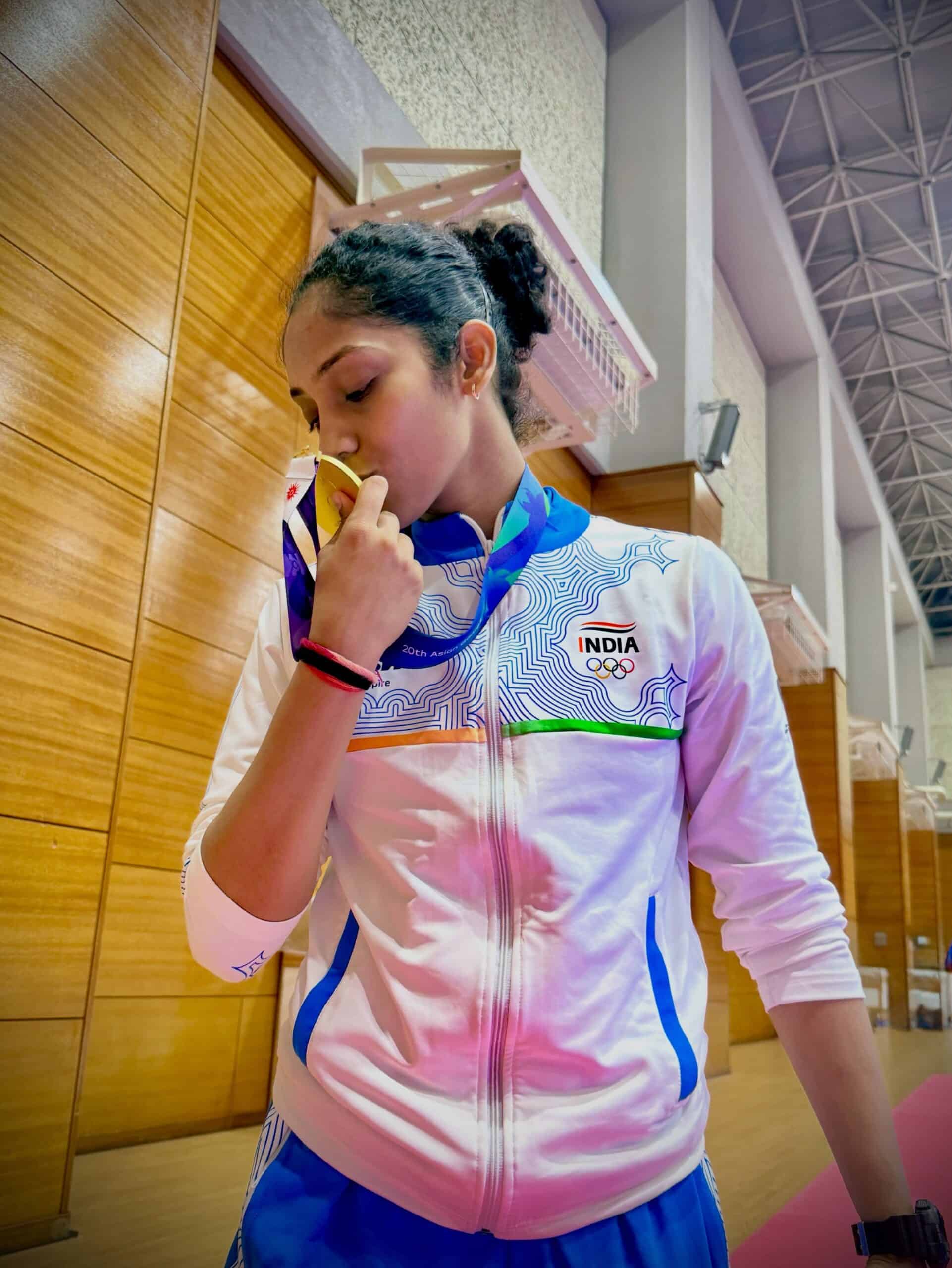
Indian kabaddi player Sonali Vishnu Shingate dedicated her Asian Games 2026 gold medal to her family after helping India defeat Iran 37-34 in the women’s final at the Aichi-Nagoya Games.
The victory was particularly meaningful for Sonali, who had waited eight years to win Asian Games gold after securing silver in 2018 and missing the Hangzhou edition because of injury. Following India’s triumph, she described the achievement as an emotional moment and urged authorities to establish a professional women’s kabaddi league in India.
Sonali Shingate Celebrates Long-Awaited Asian Games Gold
India successfully defended their women’s kabaddi title with a narrow three-point victory over Iran. For Sonali, the result marked the fulfilment of a long-standing ambition. She had previously won gold medals at other international competitions but had never secured the top prize at the Asian Games.
Speaking to ANI after the final, Sonali expressed her happiness at finally achieving that goal.
“It’s a very happy moment for us. It’s a pride moment as well as an emotional moment. Every player dreams of representing their country and winning a gold medal. I have played many times before this, but this is first time for the newcomers in the team. It’s a very happy moment for them as well,” said Sonali after the gold medal win.
The Indian player reflected on the disappointment of finishing second in 2018 and the years of preparation that followed.
“I didn’t have an Asian Games gold medal. I have won gold medals in the World Cup, Championship and SAB Games. But I have waited a lot for the Asian Games. We won silver in 2018 and then gold in 2026. I can’t express my happiness,” she told ANI.
Her achievement was even more significant after an injury prevented her from participating in the previous Asian Games in Hangzhou.
India Defeat Iran 37-34 in Thrilling Women’s Kabaddi Final
India faced a difficult challenge from Iran in the gold medal match. The contest remained closely fought, with Iran threatening to overturn India’s advantage during the closing stages. However, the Indian defence delivered a decisive moment with approximately one minute remaining.
A crucial tackle on Iranian player Aynaz prevented a late comeback and helped India protect their lead.
India eventually secured a 37-34 victory to retain their Asian Games women’s kabaddi title.
Sonali said the team was delighted to fulfil the expectations of supporters back home.
“Indians always dream of winning a gold medal in Asian Games. We have fulfilled their dream today. We are very happy about it,” Sonali said.
The victory also contributed to India’s growing medal tally at the Aichi-Nagoya Games.
Sonali Shingate Dedicates Gold Medal to Her Family
After the final, Sonali acknowledged the sacrifices required to compete at the highest level. She dedicated her medal to her family, crediting their encouragement throughout her career.
“I would like to dedicate the medal to myself and my family. Every player works hard, has patience and struggles. I would like to dedicate the medal to my family as they always support me. They always tell me to practice and rest. I have a lot of support from them,” she said.
Her comments highlighted the importance of family support during her recovery from injury and return to international competition.
For Sonali, the gold medal represented not only sporting success but also the reward for years of persistence.
Sonali Calls for Professional Women’s Kabaddi League in India
Beyond celebrating the Asian Games victory, Sonali used the occasion to advocate for greater opportunities for female kabaddi players. She urged the government and sporting authorities to introduce a professional women’s competition similar to the men’s Pro Kabaddi League.
Sonali believes such a tournament would improve financial opportunities, increase professionalism and help identify emerging talent.
“I would like to tell the government that they are already supporting Kabaddi at an international level. If there is a Pro Kabaddi League like tournament in our country, it would be very good for women’s players. There is a men’s league now. This will increase professionalism in Kabaddi. Talent will come out more. Every player will get financial support from the franchises. The glamour of Kabaddi will also increase. Especially for women’s Kabaddi. I would like to tell them to focus on Kabaddi. Let’s start a women’s Kabaddi league as soon as possible,” she said.
A professional league could provide a regular competitive platform for domestic players while creating more opportunities for sponsorship and career development.
Why a Women’s Kabaddi League Could Help the Sport Grow
The men’s Pro Kabaddi League has provided players with a professional platform and increased the sport’s visibility. Sonali believes a comparable competition for women could deliver similar benefits.
A dedicated women’s league could help players gain experience through regular high-level matches and provide opportunities for talented athletes from different regions.
Franchise involvement could also create additional financial support for players pursuing professional careers. For younger athletes, the possibility of competing in a national league could provide another pathway towards representing India internationally.
Sonali’s comments emphasised the need to build on the women’s national team’s success by strengthening opportunities at the domestic level.
Coach Rajesh Padave Recalls Sonali’s Injury Setback
Sonali’s coach, Rajesh Padave, praised the Indian women’s team and reflected on the difficult journey that preceded her gold medal. Speaking to ANI, Padave described the achievement as a proud moment for Indian sport.
“It is a matter of great pride that the women’s team has won gold. First, we secured gold in cricket, and now the women’s Kabaddi team has also won gold. This is a huge achievement, and I congratulate the entire Kabaddi team,” Padave said.
He also recalled how Sonali missed the Hangzhou Asian Games after suffering an injury shortly before the competition. Sonali decided against participating because she believed she would not be able to perform at her best.
The coach explained that she instead committed herself to recovering and returning stronger for the next edition.
“Just before the Asian Games in China last time, Sonali suffered an injury. I told her that the injury isn’t a major issue and she can still go and play. She replied, ‘I won’t be able to give 100%. It would be better for me to just come back home.’ It was actually a difficult situation, as she could have easily gone to play. But she said, ‘Sir, I will work hard and play in the next Asian Games,’ acknowledging the significant difference in performance levels required. Despite that, she worked incredibly hard, made it back into the Indian team for the Asian Games, and is now returning with a gold medal. We feel immense pride.”
Her successful return to the national team demonstrated the determination required to overcome the disappointment of missing a major international tournament.
India Retain Women’s Kabaddi Gold at Asian Games 2026
India’s victory over Iran ensured the team successfully defended the women’s kabaddi gold medal won at the Hangzhou Asian Games.
The final also marked a major personal milestone for Sonali, who completed her journey from silver medallist in 2018 to gold medallist in 2026.
At the point reported, India’s overall medal tally at Aichi-Nagoya had reached 27.
| Medal | Total |
|---|---|
| Gold | 3 |
| Silver | 11 |
| Bronze | 13 |
| Total | 27 |
The women’s kabaddi triumph added another important achievement to India’s campaign.
Asian Games Gold Could Strengthen Push for Women’s Kabaddi League
For Sonali Shingate, winning Asian Games gold was the culmination of years of hard work, injury recovery and determination. Her contribution to India’s 37-34 victory over Iran helped the team retain its title and gave her the medal she had pursued since 2018.
However, Sonali hopes the achievement will have an impact beyond the national team’s success. Her call for a professional women’s kabaddi league reflects a desire to create better opportunities for future generations of players.
With India continuing to achieve success in international women’s kabaddi, the development of a dedicated domestic league could become an important step towards strengthening the sport.