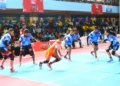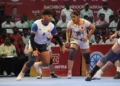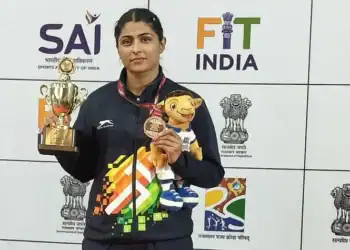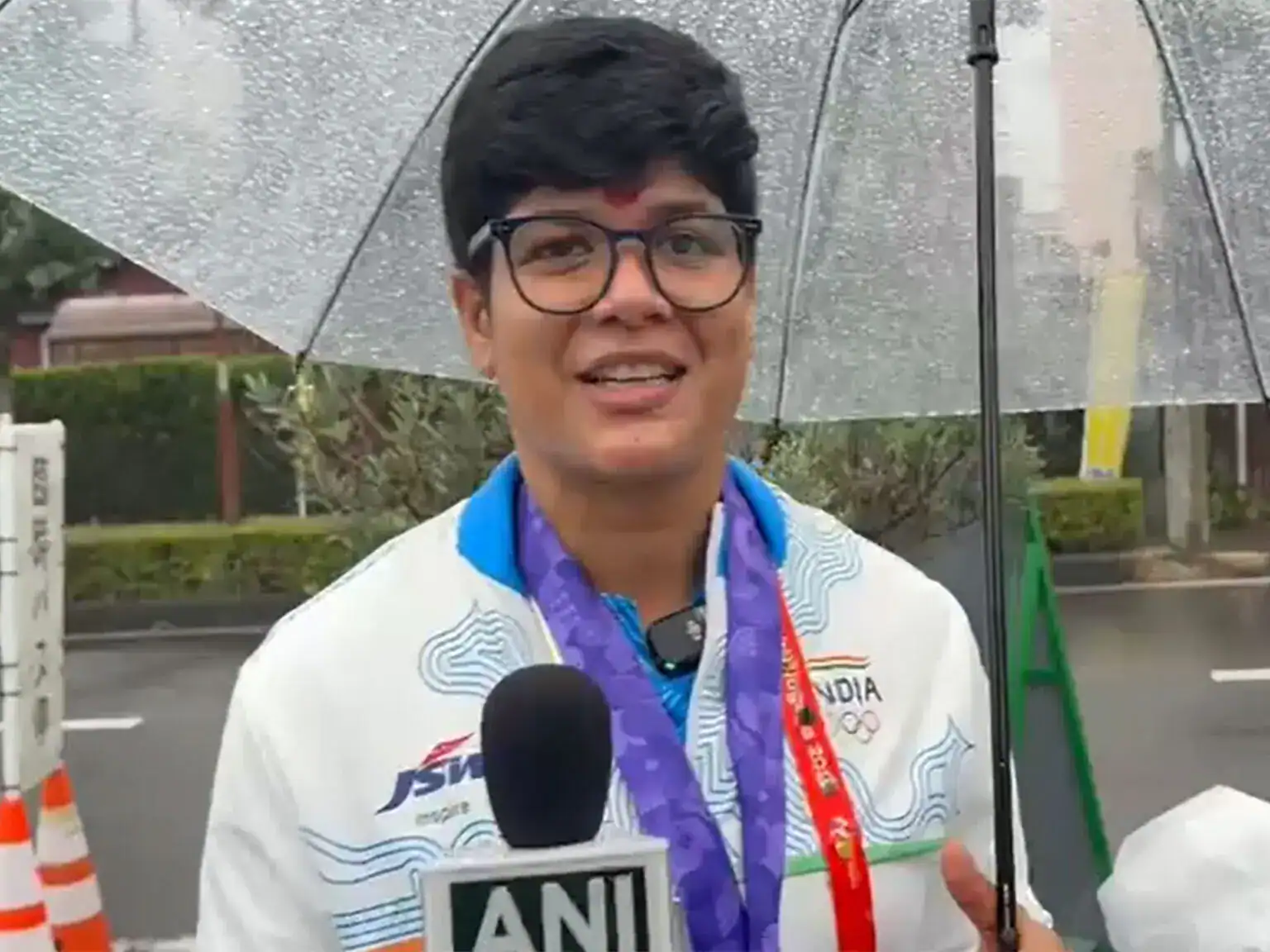
Veteran Indian kabaddi player Pinky Roy described India’s Asian Games gold medal as the reward for years of perseverance after helping the women’s team defeat Iran 37-34 in the final at the Aichi-Nagoya 2026 Asian Games.
Making her Asian Games debut after a long and challenging journey, the experienced defender dedicated the triumph to the country while also calling for greater opportunities and structural support for female athletes, particularly in her home state of West Bengal.
A Long Road to Asian Games Gold
Pinky reflected on the obstacles she overcame before finally standing on top of the Asian Games podium.
“My journey has been very tough,” she said.
She began her senior career in 2012 before suffering a serious knee injury that required surgery in 2013. After joining the Indian Railways in 2016, another setback followed in 2019 when she received a national camp call-up but once again required knee surgery.
Despite multiple interruptions, Pinky returned to competitive kabaddi and eventually fulfilled her dream by winning an Asian Games gold medal in 2026.
India’s Tactical Plan Against Iran
Pinky revealed that India entered the final determined not to repeat the mistakes made during the group stage.
“We made a few mistakes in the pool matches by giving away two or three points at once,” she explained.
“Our strategy in the final was to concede only one point if necessary and avoid giving away multiple points because our raiders were scoring consistently and collecting bonus points.”
According to Pinky, that disciplined defensive approach proved decisive as India successfully defended their narrow lead to secure the gold medal.
Praise for Iran’s Improvement
The experienced defender also acknowledged the significant progress made by Iran.
“They played really well,” Pinky said.
She pointed out that Iran had reduced the margin compared to the recent World Cup final and praised their hard work throughout the tournament, particularly after eliminating Chinese Taipei to reach the gold-medal match.
Dream of Returning to Bengal
Away from the mat, Pinky spoke emotionally about representing West Bengal.
Although she is originally from Kolkata, she currently works with South Central Railway in Hyderabad because opportunities were unavailable in her home state.
“I have no complaints about working in Hyderabad,” she said. “But who wouldn’t want to work in their own city and state?”
Pinky added that she would gladly return to Bengal if given the opportunity.
Hope of Building a Kabaddi Academy
Looking toward the future, Pinky expressed a strong desire to help develop kabaddi in West Bengal.
“There is huge talent in Bengal, but we need to give people opportunities,” she said.
“If I receive support to establish an academy, I will absolutely return and do it. I want to make a difference to the sport and to my state.”
She highlighted Haryana as an example of how sustained government backing has helped produce numerous international athletes.
According to Pinky, similar investment in Bengal could allow many more players from the state to represent India in the future.
“I am the only player from Bengal at the moment,” she said. “With the right opportunities, there could be many more players from the state representing India and winning medals.”
Railways Celebrate Kabaddi Success
South Central Railway also celebrated India’s double gold at the Asian Games, with five of its employees contributing to the men’s and women’s title-winning teams.
Women’s team members Pinky Roy and Ritu Negi represented India alongside coach Neetha Didwe.
The men’s squad included Sumit Sangwan and Ayan Lohchab, who also helped India secure the gold medal.
South Central Railway General Manager Sanjay Kumar Srivastava congratulated the players and coaching staff, describing their achievements as a matter of pride for both Indian Railways and the organisation.
Pinky’s success story, from multiple knee surgeries to becoming an Asian Games champion, now stands as one of the inspiring stories of India’s successful kabaddi campaign in Aichi-Nagoya.