Why Kabaddi Formations Matter
Kabaddi is not only a game of strength and speed. It is also a game of planning and teamwork. Every successful team follows a clear strategy while defending and attacking. This is why many people compare Kabaddi to a game of chess.
If you want kabaddi formations explained, it is important to know that players do not stand in random positions. Every player has a role, and every movement is planned to stop the raider or create a scoring chance.
How a Full Defensive Formation Works
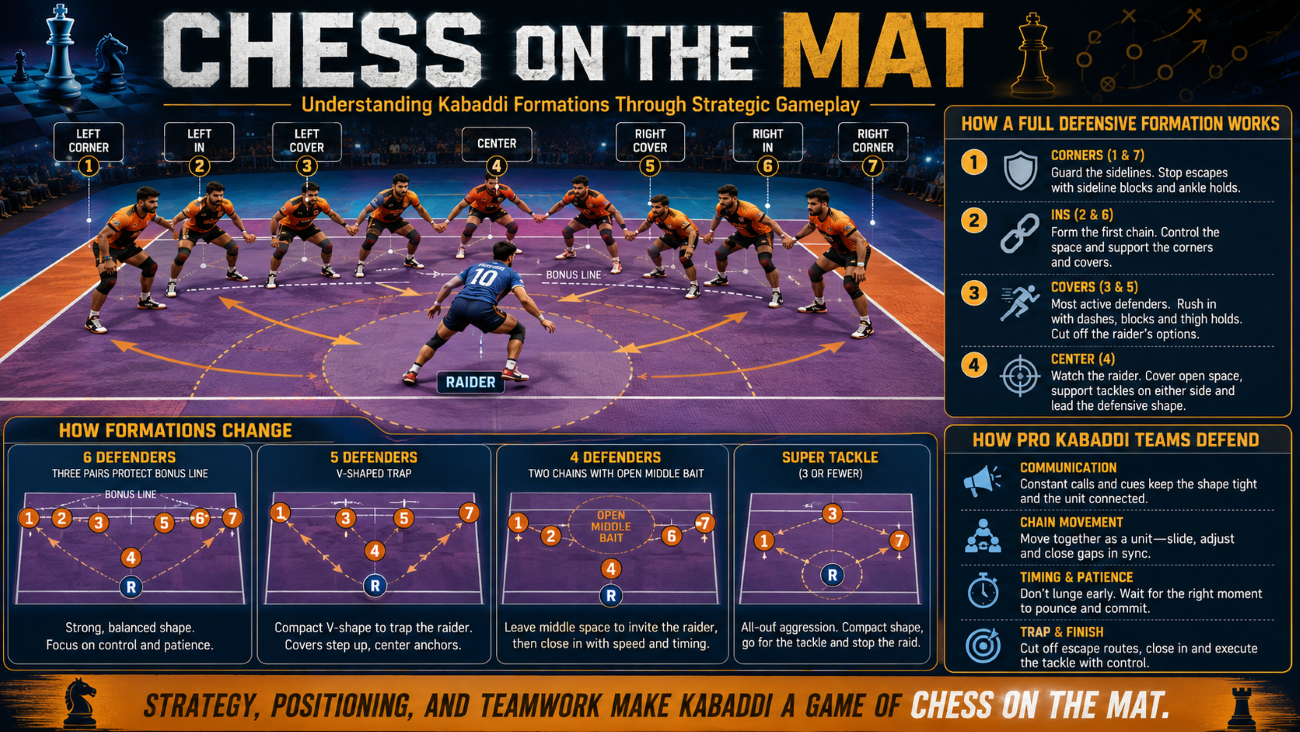
One of the best examples of offensive and defensive formations in kabaddi is when all seven defenders are on the mat.
The two corner defenders stand at the ends of the court. They are usually responsible for ankle holds and stopping raiders who move toward the sidelines.
The cover defenders stand closer to the middle. Their job is to rush in with strong blocks or dashes when a raider commits to one side.
The In defenders support the corners by forming chains. Holding hands allows them to move together and make stronger tackles.
The center player usually stays slightly behind the others. This player supports the team during difficult tackles and helps cover open spaces.
This setup creates a strong defensive wall that is difficult for raiders to break.
How Formations Change During the Match
The strategy behind kabaddi formations changes as players are eliminated.
With six defenders, teams often form three groups of two players while protecting the bonus line.
When only five defenders remain, the bonus line is no longer active. Teams usually create a V-shaped formation that forces the raider into the middle, where defenders can attack from both sides.
With four defenders, the team often splits into two chains. The middle of the court is left open to tempt the raider into attacking one side before both defenders move in together.
These changing patterns show why kabaddi formations explained involve much more than simply standing in a position.
How Pro Kabaddi Teams Defend
Many fans wonder how pro kabaddi teams defend so successfully against the world’s best raiders.
Professional teams rely on teamwork more than individual skill. Players communicate through quick words, eye contact, and even small movements while holding defensive chains.
When one defender notices the raider losing balance or changing direction, the entire chain reacts together. This perfect timing allows defenders to trap the raider before they can escape.
This teamwork is one of the biggest reasons why how pro kabaddi teams defend has become such an important part of modern Kabaddi.
The Importance of Super Tackle Formations
When only three or fewer defenders remain, the game changes completely.
Instead of attacking early, defenders often wait patiently for the raider to make the first move. A successful tackle in this situation earns two points through a Super Tackle, making it a valuable opportunity.
Even with only two defenders, teams continue using smart positioning to force mistakes from the raider.
Strategy Wins Championships
The strategy behind kabaddi formations proves that Kabaddi is as much a thinking game as it is a physical sport. Every position, every movement, and every tackle is planned to give the team the best chance of success.
Understanding offensive and defensive formations in kabaddi helps fans enjoy the sport even more. It also explains how pro kabaddi teams defend with such discipline and why strong teamwork often makes the difference between winning and losing.